Friday, September 30, 2016

WHO WOULD WANT ALL THOSE LAMPS?


Just wonderin’…

Who would want all those lamps?

When I was a kid, I’d sometimes watch a daytime game show. Many times the prize would be so many dollars’ worth of Quoizel Lamps. I’d think to myself “Who would want all those lamps? Don’t they already have lamps?” I could understand advertisements for things that got eaten, or used up like toilet paper, or even wrecked, like a car. But lamps? 

Even today, watching shows like “How It’s Made” I wonder who would want all those pocket knives, or wristwatches, or surf boards, other doo-dads. Don't surfers already have surfboards? I don’t need them, how come they make so many of them?  Dumb of me, I know, but the consumption of such things, I call them “things you didn’t know you didn’t need,” is still a mystery to me. It’s a good thing that there aren’t too many others like me, otherwise our economy would stagnate.

By very strange coincidence, my stepdaughter works for Quoizel and has done so for over twenty years. Good company – they make a lot of lamps.


Friday, September 23, 2016

HOW YOU GONNA KEEP 'EM DOWN ON THE FARM


Just wonderin’…

Remember the party standby, deviled eggs? Just plain deviled eggs. Today, according to a recent issue of Saveur magazine, they marinate the whites in soy sauce and raspberry vinegar - just for fifteen minutes, mind you - and then fill them with the yolks that were combined with lump crab meat, avocado, and apple.


Chefs are getting inventive. Food is getting fancy. I suppose that’s a good thing, yet I wonder what “comfort food” will be to generations to come.


Friday, September 16, 2016

O. HENRY

This is a brief piece I wrote for the Southern Writers series in our community magazine. O. Henry sure was an interesting character, and I enjoyed researching his life as much as I enjoy reading his work.

William Sidney Porter

Many people remember O. Henry around Christmas time, thinking of his classic short story The Gift of the Magi, but this writer was much more than the author of that one prominent piece. O. Henry was the pen name of William Sidney Porter, born in Greensboro, North Carolina, in September 1862.

A voracious reader from the start, Porter was a sketch artist and draftsman, a ranch hand and cook, a teller and bookkeeper, singer and musician, and a licensed pharmacist who also wrote articles and short stories on the side.
It was his job at a bank in Austin, Texas, that got him in trouble: he was suspected of embezzling funds and adjusting the books and was fired. A while later, the Feds audited the bank’s books and, long story short, they called for his arrest, he took off for New Orleans and then Central America, and, because the wife he’d left in Texas was dying, he went back and faced his sentence. Porter had had many stories published under a variety of pennames, but it was while he was in prison that he became known as O. Henry, the name he was using most often.

Porter, O. Henry, was a master of the twist at the end of the tale. In The Gift of the Magi, his short story most likely read by everyone during their school years, husband and wife sacrifice their one prized possession to get the other something to enhance that prized possession. In The Ransom of Red Chief, the kidnappers pay the boy’s father to take him back. In many stories, someone does a kind deed to help another, and then winds up suffering for it. In others, the person doing the good deed, though he was formerly a criminal, is let off because of the deed.

In his short lifetime, Porter died at 47, he wrote hundreds of stories. Many were originally published in collections of his works such as “Cabbages and Kings.”  His more famous stories are usually included in American short story anthologies, and in high school English texts as great examples of irony.


Two interesting notes:

In Honduras while evading his prison term, in one collection of stories he wrote, Porter coined the phrase “banana republic, now defined as “a small nation, especially in Central America, dependent on one crop or the influx of foreign capital.”

And, like the S in the name of Harry S. Truman, the O in O. Henry is a compromise of sorts, and just stands for itself.


Friday, September 9, 2016

HIGH SCHOOL BAND REMEMBERED

A Screenshot of what was our old high schol


I am not a fan of most free verse, but this one literally caught my eye on The Writer’s Almanac because I could take most of it in in one look. It struck a familiar note.


The High School Band in September

On warm days in September the high school band
Is up with the birds and marches along our street,
Boom boom,
To a field where it goes boom boom until eight forty-five
When it marches, as in the old rhyme, back, boom boom,
To its study halls, leaving our street
Empty except for the leaves that descend to no drum
And lie still.
In September
A great many high school bands beat a great many drums,
And the silences after their partings are very deep.


I know we weren’t up with the birds, but in my freshman year of high school, whenever it was that we had to practice for a parade, we too had to march from the high school down the block to the small playing field that was surrounded by houses. Boom, boom, boom. The next year we were in the new high school, a mile away and much closer to where I lived, with extensive playing fields for our marching. I've written about Being in the Band and marching at football games.

I had to refresh my memory and take a look at that old high school on Google. It’s now an elementary school (I knew that.) but from the air it looks like it had extensive renovation, and a lot of old homes were sacrificed for its expansion. The houses in the back gave way to the expanded building and a paved play area. The old field is still there. Where there were houses across the street from the front of the school, there is now half a block’s worth of playing field. Nice.


Thursday, September 1, 2016

THE TIDE RISES, THE TIDE FALLS

Monterey, California - 2001
Does the tide know what year it is?

On March 6th of this year, The Writer’s Almanac featured this poem by Henry Wadsworth Longfellow. (And can’t you just hear a child, about to recite one of Longfellow’s poems, give the title and the poet’s whole name: “…by Henry Wadsworth Longfellow.” They are so proud to have memorized his whole name, much less the poem.) I’d never before had the pleasure to read this poem of his. It speaks to me of the relentless passage of time and tides. It could speak of any time, even today, except for that one word, hostler, that gives it a place in a time long ago.


 The Tide Rises, the Tide Falls


The tide rises, the tide falls,
The twilight darkens, the curlew calls;
Along the sea-sands damp and brown
The traveller hastens toward the town,
     And the tide rises, the tide falls.
Darkness settles on roofs and walls,
But the sea, the sea in the darkness calls;
The little waves, with their soft, white hands,
Efface the footprints in the sands,
     And the tide rises, the tide falls.

The morning breaks; the steeds in their stalls
Stamp and neigh, as the hostler calls;
The day returns, but nevermore
Returns the traveller to the shore,
     And the tide rises, the tide falls.


Friday, August 26, 2016

THE HAIRCUT


This is how he'd like is hair to look - but that was 32 years go!

I love it! Frank has been pissin’ and moanin’ all week that this was the worst haircut he ever got. Then Rich was here to change the air filter on the car, and the first words out of his mouth were “Gee Dad, I like your haircut.”  That’s what I kept telling him – it looks great! – but curmudgeon that he is, he likes it longer. Oh, well. We'll think of it as a "summer cut" until it grows in.


Friday, August 19, 2016

FIND YOURSELF IN A NATIONAL PARK

NATIONAL PARK SERVICE CENTENNIAL – August 25, 2016 - and I wrote this article for our community magazine. Have you seen and heard the advertisement running for the National Parks Service? I love it! It's Happy Birthday, with each note of the song taken from a sound from the parks - from a chickadee's chirp to a lighthouse fog horn, from a floor polisher at the Smithsonian to the sound of the cast of a fly fishing lure. Very clever.  See and hear it here.


One hundred years ago this month, the National Park Service was created “to conserve the scenery and the natural and historic objects and wildlife therein, and to provide for the enjoyment of the same in such manner and by such means as will leave them unimpaired for the enjoyment of future generations.”  There are fifty-eight national parks in the National Park Service, the majority of them west of the Mississippi in the wide open spaces. As you would expect, the largest park, Wrangell-St. Elias, is in Alaska. Alaska boasts eight national parks. Hot Springs in Arkansas is the smallest, and is the only national park within an urban area. Arkansas, like South Carolina, has only one state park.  Many states have none.

Though this is the centennial month of the National Park Service, it is said that October is the best month to visit a state park. The crowds have thinned out and the weather is excellent. This is a good time to begin planning for a fall visit to a national park. There are only a dozen national parks east of the Mississippi. Nearby, just east of Columbia, our state boasts Congaree National Park, a temperate climate swamp, with some of the largest hardwood specimens in the country. Great Smoky Mountains National Park is just under three hours away from us in Sun City Carolina Lakes. Both are ideal destinations for autumn day trips.

Frank at South Carolina's only National Park  the swampy Congaree
Further exploration of any of our national parks will require more than a day trip. Shenandoah National Park is a drive of about five hours – you wouldn’t want to do that in a day, and Everglades National Park, the largest subtropical wilderness in our country, is at least eleven hours by car. A bit further south, historic Biscayne and Dry Tortugas National Parks, the latter accessible only by seaplane or boat, are home to marvelous marine areas for snorkeling, camping and other outdoor recreation.

Pit a pin in a map where Nevada and Colorado meet Idaho, and you will be surrounded by national parks out west: little ones like Great Basin in Nevada, and big ones like Death Valley, the largest in the contiguous states, and our first national park, Yosemite. You are almost spoiled for choices out there. West of the Mississippi, on the mainland, there are three dozen national parks. You are sure to be able to visit several of them in one well-planned trip.

Yellowstone's Old Faithful. Old Faithful was on my list of places to see,
and I'm happy to say experienced it. 

But more than overseeing the national parks, the National Park Service, under the Department of the Interior, is responsible for forts, battlefields, military parks, monuments, historic sites, and trails, be they large and small, in all fifty states. They see to places like Ellis Island and the Appalachian Trail, and Gettysburg and Kitty Hawk in the east, and Mesa Verde, Little Big Horn, Alcatraz and the Muir Woods in the west. A full state by state listing of the sites they administer, sites to which you might want to plan a trip, can be found at their website. Simple to remember: nps.gov.
 
Teddy Roosevelt's home, Sagamore Hill, was the closest National Park Service site
to where I lived on Long Island. I was always fascinated by the house and its furnishings
 - well, maybe not so much by all the animal trophies.
From my first visit there, I was always delighted to visit another old house, mansion, castle - anything that taught me how other people lived in times gone by throughout the world.


Friday, August 12, 2016

FEW AND FAR BETWEEN


                  MAINTAINING SUNDAY BEST


When we were much younger, there was a nice array of local shops to help us maintain our Sunday-best wardrobes. While we may fondly remember them and, on occasion, wish them back, today such shops are few and far between.

Do you remember the shoe maker, the cobbler, and getting your shoes resoled and heeled? Remember the unique aroma of shoe leather and polish? Did you ever go there just to get your shoes shined?  Did you ever go there to have your shoes made?


Do you remember the good drycleaner? A trip to the drycleaner was a weekly thing in many households. Many shops had a tailor on their staff, but sometimes a good tailor had his own shop. While there are still drycleaners round, with today’s large selection of clothing sizes, alterations are almost a thing of the past.

Do you remember the ladies dress shop with just one or two of the “latest numbers” in the window? Do you remember putting together an “ensemble” for Sunday-best? Do you remember the haberdasher? It was usually conservative, somber, and quiet in both activity and choice of colors. Even the ties were muted. Do you remember the shoe store?


Department stores, malls, and on-line shopping have done away with most of these shops. Most of us no longer wear our shoes and clothes for years and years. Our things rarely wear out. We tire of them and pass them on to a charity. Now our closets are packed and our clothes have clothes, but it is just the way we are, not the way we wore were.


Friday, August 5, 2016

SUNDAY BEST


Easter Sunday Best in the 50's. My dress was dark pink my sister's was pale pink.
(I hated that dress!)(My brother doesn't look too happy here either.)
After church and the chocolate bunnies, Easter Sunday picture-taking
was one of my mother's rituals. 


On one recent morning, the staff of our community magazine were batting around ideas for our often-printed article theme of “Do You Remember…?” We got to talking about what we once wore for a plane trip, or to church, or to work. There were various levels of dress, from “just got out of bed” to “Sunday Best.”

Staff members remember the men in their families going off to work in suit and tie, or even in overalls, jacket, shirt and tie. And, bowler or fedora, they always wore a hat. Men’s hats seem to have gone out of favor when J.F.K. went around without one. Women’s hats stayed in favor longer because Jackie Kennedy wore them.

Not a hard hat to be seen!  You can be sure that this was in the 30's, long before OSHA

Sundays might have found women in a neat suit, but they usually wore dresses. House dresses, day dresses, Sunday-best dresses. And aprons too. Most of us can remember June Cleaver or Margaret Anderson, pertly and appropriately dressed, apron in place, and usually wearing high heels. Today we shake our heads at this style of dress. Just think of all the ironing! Just think of housekeeping in those high heels!

Thr caption on this one from Google was "retro vacuuming."  I'll say it's retro!
I'm glad that those days are long gone.

Adult men of all ages seem to have dressed similarly, but with women it was a different story. Mothers usually wore open shoes, be they high-heels or flats, and Grandmothers usually wore black lace-ups with chunky heels. Actually, some women of those years, thank you Kathryn Hepburn, did wear slacks every day. Grandmothers? Never.

Do you remember bobby sox, saddle shoes, penny loafers, poodle skirts, the craze for grey and pink? Do you remember, of course you do, miniskirts, bell bottoms, go-go boots, and Nehru jackets? Clothes seem to be less faddish these days.

Holey socks, you can still get poodle skirts!
I never had one, didn't miss it at all. 

“Sunday Best,” the dress code easily understood by all, was the thing to wear on most special occasions. We wore Sunday-best to go to anything a bit more special than what we did every day. We dressed up for a plane trip, with hats and gloves and matching luggage. Same for a long trip by car or train. We always dressed somberly for funerals. It was just what was “done.”

Today, what is “done” is frequently “anything goes.” It is still true that we are judged on our attire, however unconsciously and silently, by others. We still want to spruce up to go out to dinner, but the dress code is casual. But then, now we dine out much more casually and frequently than our parents did. We seniors may think that standards are slipping miserably, but then seniors in any era probably thought the same thing.

This one's from The People of Walmart.
Walmart's dress code is "Anything Goes." and you
know there are worse getups than this one.


Are we any worse, or any better, for these changes? No, we are status quo. Today’s social standards and mores have evolved and developed along with technology. We have a wider availability of goods and services and the money to pay for them, and, especially in wash-and-wear, a vast array of clothing choices.


"Clothes make the man. Naked people have little or no influence on society."
Mark Twain 


Wednesday, August 3, 2016

SOMETIMES I WONDER

The original Rocking Horse, made of maple from our own property.
hat's our oldest grandchild. She now has children of her own.

One morning recently, one of the bloggers I read each day wondered about a very old book of fables she’d purchased at the brocante. The little volume, recovered in fabric, was printed in 1803. It’s a wonderful pastime to wonder where such treasures have been all these years. Who touched them, took care of them, and passed them on.

A later version, this one made of cherry.
Our second brood of granddaughters have this one. 

I often wonder what will happen to some of things Frank and I have. I wonder what, in years to come, people will make of the monogram he burned into most of the wooden objects he made. It’s a J combined with a capital Ã…, for Ã…sgard. (In the 80’s, we moved to a place where there were no house numbers, so the folks there named their homes. We chose Ã…sgard, home of the gods. As in ye gods!?)

Katie again with her doll buggy and her scooter.

From small boxes to a grandfather clock, from kitchen utensils to Stickley or Shaker style furniture, of all the things he’s made, and we have albums full of pictures, the things I wonder most about are the toys. Yes, who will admire them and wonder who made them, who will touch them, play with them, cherish them, and pass them down to their own grandchildren as they will be passed down from us.


Katie's mom had some professional pictures done of her and her toys.
Who'd have thunk that the hay wagon would really ever hold hay? 


Saturday, July 30, 2016

FARMERS EGGS


Ah, yes – eggs! One of my favorite foods. I could do without meat, but I could never do without eggs. I’ve had a Farmers’ Eggs recipe in my repertoire for eons, but only a few years ago did I write it down as a recipe for two. I was in a strange phase back then, and I wrote the recipe in all caps. It’s one of those recipes that stick in your head because you know you can always ‘wing it’ with the add-in ingredients.

And speaking of fresh eggs, I would never make this recipe with fresh eggs, ones laid that morning, if I did have them. Their taste is subtly different and delicious, and shouldn’t be combined with other thing in one mouthful. I’ve had fresh eggs only rarely in my life, and I do savor them.


J LJ - FARMER'S EGGS FOR TWO (OR MORE)   

   
1 SMALL LEFTOVER COOKED POTATO, CUBED
2 SLICES BACON OR ½ CUP CHOPPED HAM
½ CUP CHOPPED ONION OR SLICED SCALLION

1-2 TBLSP OLIVE OIL OR BUTTER TO SAUTE THE ONION OR POTATOES
4 EGGS
¼ CUP MILK, CREAM, SOUR CREAM, WHAT HAVE YOU?
2 OZ. GRATED SWISS OR CHEDDAR
                                                                                             
OPTIONAL - PARSLEY OR A 2 OZ. JAR OF CHOPPED PIMENTOS FOR COLOR  

METHOD:
BROWN THE POTATOES IN THE OIL, SET THEM ASIDE.
IF USING BACON, CHOP IT UP FIRST, THEN SAUTE IT WITH THE ONION.  IF YOU ARE USING HAM, FIRST BROWN UP THE ONIONS IN OLIVE OIL, THEN ADD THE HAM.  OBVIOUSLY, YOU DON’T NEED TO BROWN THE SCALLIONS IF THAT’S WHAT YOU ARE USING.
GRATE THE CHEESE.  BEAT THE EGGS AND MILK. 
AFTER BROWNING THE POTATOES AND COOKING THE BACON, HAM, &/OR ONION, ASSEMBLE THEM.  ADD OPTIONAL PARSLEY OR PIMENTO.
IN A PAN THAT WILL BE LARGE ENOUGH TO HOLD ALL OF THE INGREDIENTS, BEGIN TO COOK AND SCRAMBLE THE EGGS ON A LOW TO MEDIUM HEAT.  WHEN THE EGGS ARE ALMOST SET, WITH STILL SOME ‘WET’ YET TO BE COOKED, ADD THE POTATO MIXTURE, STIR THAT IN, AND THEN ADD THE CHEESE LAST.  STIR AND CONTINUE TO COOK UNTIL THE EGGS ARE DONE.
SERVE IT UP.  MAYBE SPRINKLE SOME FRESH BREAD CRUMBS ON TOP.


          SERVES AS MANY AS YOU WANT J JUST DO MULTIPLES


Friday, July 22, 2016

TWO EASY RECIPES FOR TWO SENIORS

These two easy recipes were to be the Sidebar to my article on Cooking for Two Seniors.  I've had good reviews from both recipes.


BREAKFAST BATTER

This recipe is good for both waffles and pancakes, and takes little time to whip up.  Of course, it serves 2.  Here goes:

Preheat your waffle iron or griddle, and meanwhile, in a 2-cup Pyrex measuring cup or similar thing, add and whisk together well:
½ cup milk
1 egg
1 Tbsp. sugar
2 Tbsp. vegetable oil
Pinch of salt

After mixing that, put in on top of it:
½ cup flour, then on top of that
1 tsp. baking powder –

With your fork or whisk, sort of swirl the baking powder into the top of the flour to mix them a bit, then mix it all into the liquid until it is fairly lump free.  Voila: your batter is ready. Just enough for two seniors. 


SAUCE FOR MEAT OR POULTRY

This sauce, and its many variations, is excellent for any type of meat, including steak, roasts, chops, ham, turkey, chicken, etc., especially where there are no drippings to form the base of a gravy, or where you want an elegant, tangy sauce. The basic recipe is for two servings – multiply as needed.

On low heat in a small saucepan, melt and blend
       2 Tbsp. butter
       2 Tbsp. seedless raspberry jam*

Add  2 Tbsp. red wine*
       1 Tbsp. Dijon mustard*
       2 Tbsp. dried cherries or cranberries*

Cook until the fruit are plumped a bit. Set it aside and reheat it just before serving. If necessary, thin it with a bit more wine.


*This is the fun part. You can use any favorite jam, jelly, or marmalade; white or red wine, perhaps orange juice, perhaps a little bourbon; coarse or fine mustard (but never yellow mustard); dried cherries, cranberries, raisins, snipped dried apricots – what have you! Think reds for red meats, whites for white meat. Mix and match. Experiment with the flavors and colors you think will go together.  


Friday, July 15, 2016

COOKING FOR TWO SENIORS


Here's a piece I submitted to the community magazine. I've written on this subject before in this blog, but for the magazine I had to make it more general and leave out what "I" do.

Ingredients for two


Except for state occasions, get-togethers, and holidays, most of us here in Sun City Carolina Lakes are now cooking for two, some even for one. As seniors, we’re usually eating less at each meal, and sometimes we even just “graze” on what’s handy. Whereas, for example, we would once eat a whole chicken breast each, we’re now filleting it into two, even three portions, leaving one for a snack. Where we once had the whole “heart attack on a plate,” the full Sunday breakfast of eggs, bacon, home fries, toast, butter, jam, and all the fixings, we now are satisfied with perhaps just two strips of bacon, eggs, and an English muffin.

done


There are many cookbooks and websites with recipes for two, but they are meant for much younger, larger appetites. Paring down those recipes, or any good recipe, is a matter of using your cooking skills and your imagination. 
If you find yourselves eating out regularly because you’re stumped for what to have, it’s time to save money in more ways than one. Few things are good left over, and you don’t want to have mystery meals siting fermenting and forgotten in the back of your refrigerator. If you’re stumped for ideas, make up a suggested dish menu for each day of the week, perhaps Monday, pork chops or chicken; Tuesday, pasta, pizza or something else Italian; Wednesday, beef; Thursday, soup; Friday, seafood; and so on. This menu idea works well for breakfast too.

Unless it’s spaghetti sauce, soups, or stews, or baked goods that you can freeze, try not to cook for any more than two. Take advantage of sales and individually portion, bag, and freeze things like chicken breasts, pork chops, bacon, sausages, and other single serving meats. Buy bagged, not boxed, frozen shrimp, vegetables, and fruits, where you can seal the bag for the next time. Buy prepared specialty items, like those from Trader Joe’s, that serve just two.

This will be...

Develop your own list of things to keep on hand in the freezer, in the refrigerator, and in the pantry. Get a plastic bin for each freezer shelf to keep track of meats, baked goods, veggies, soups, and such. To get the best of what you freeze, be sure to package each type of item properly. Get inventive and challenge yourself to come up with a great meal with what you have in stock. Try to rethink your old favorites that now serve too many. Be creative in thinking of what you can substitute with what you have on hand for what a recipe might call for.


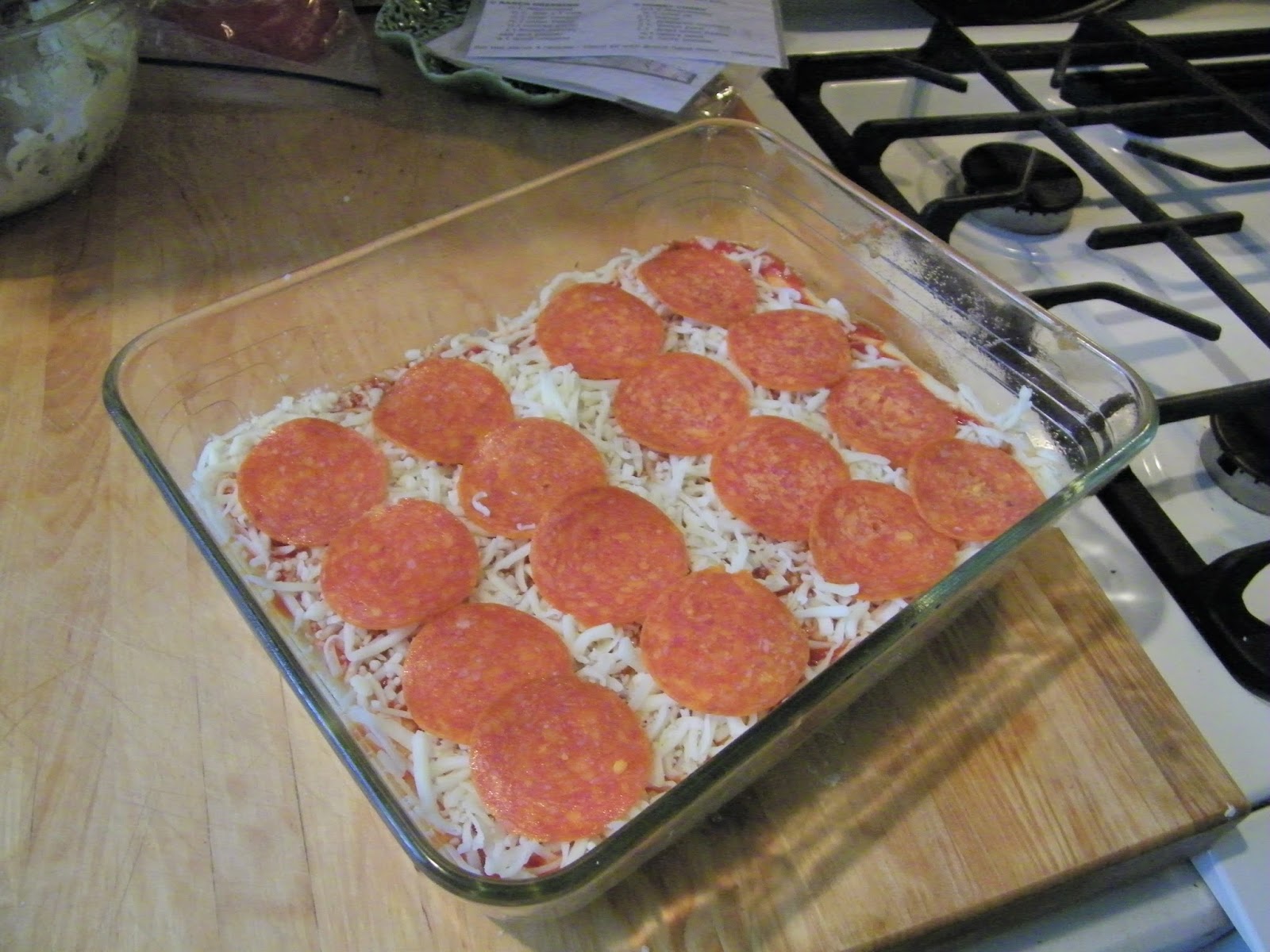
...Deep Dish Pizza...

Don’t open a can or jar of anything you won’t use in for one meal. Don’t buy large containers of broth or bouillon, use Knorr or Maggi bouillon tablets. Where a big batch recipe calls for a can of condensed soup, like cream of chicken, you can substitute a small batch of béchamel sauce, flavored with bouillon. Try the variety of Progresso soups – canned for two – and add a teaspoon, or more to taste, of balsamic or apple cider vinegar, or sherry to keep from having to add salt. Adding your own toppings, tangy things like shredded cheese, chopped fresh tomato, or a dollop of sour cream or yoghurt, can make any soup more interesting. Some crackers, a salad perhaps, and you’re set.

...for two

Think ahead just a bit. If you’re cooking bacon, do up a few extra slices to crumble on your soup. If you’re making soft-boiled eggs for breakfast, put a few extra in the pot to hard boil for lunches and snacks.

When you hit on a great recipe for two, write it down. Challenge yourself to be creative, save money, and satisfy your senior appetite.


Friday, July 8, 2016

PROCRASTINATION


"The secret of getting ahead is getting started."
Mark Twain

I've had that quote saved for several months on a .doc in my "Blogs in Progress" file. I just never got started doing anything with it. I keep several “In Progress” files for my writing, and I usually get to each one, or Delete it, sooner or later. I thought I was prepared for today – I thought I had a blog ready to go. 

Problem is I’d already posted that one, one the community magazine didn’t use. I thought I had a nice list of blogs ready to go – wrong! Problem is I’ve put off getting started on organizing my postings and finishing the ones “In Progress.”  So today, dear readers, you get ramblings. Today I pulled Mr. Twain from the files.

On my desk, on a scrap piece of paper, I also keep a list of things to do. Right now I’ve got “iron, wash bathroom mirrors [I need to get the ladder for this - they are the big wall-to-wall ones that go to the ceiling], sew jacket, move buttons for FJ, recover lap desk, order pix, update scrap books.” That last item has been on the list for almost a year.

Now I’ve also got a mental list of the few things to do these next few days. We’ve got a special person coming to visit. That ironing to be done is still sitting on her bed, but she won't care about the top of the mirror. I’ve got to make some salad dressing for the spinach I’m going to get. I’ve got to collect the things I have on another list of stuff I want to hand over to her. I've got to...

Maybe on Sunday.


Friday, July 1, 2016

A POEM FOR JULY FIRST -- SOME KEEP THE SABBATH


SOME KEEP THE SABBATH GOING TO CHURCH  

                                    By Emily Dickinson


Some keep the Sabbath going to Church --
I keep it, staying at Home --
With a Bobolink for a Chorister --
And an Orchard, for a Dome --

Some keep the Sabbath in Surplice --
I just wear my Wings --
And instead of tolling the Bell, for Church,
Our little Sexton -- sings.

God preaches, a noted Clergyman --
And the sermon is never long,
So instead of getting to Heaven, at least --
I'm going, all along.


My thoughts exactly. One of the members of a ski club I once belonged to was quite a drinker and user of mind-altering substances – but heaven forbid she missed Mass on Sunday. She dressed me down quite nastily one Sunday, and I just let her go on and on telling me what a sinner I was. At a later date we were both at the top of a ski lift in Vermont on a brilliantly cold, crisp, sunny day. As we looked out over the snowy scenery, I remarked to her “Caroline, this is my God, my church.” She just gave me a questioning, superior, and disdainful look and then skied on down. 

The beauty of small minds is that they are consistent. I did expect just such a reaction from her, so I smiled. Yep!


Friday, June 24, 2016

TWO ONE-OFF AUTHORS - - - - - TWO CLASSIC NOVELS - - - - - TWO CLASSIC MOVIES


Here's one that I wrote for the June issue of our community magazine.


In the world of literature there are several famous authors, among them Edgar Allen Poe, Oscar Wilde, and Boris Pasternak, who, though they wrote in other forms, wrote only one novel. Also among those few are two southern writers, two very different personalities, Harper Lee and Margaret Mitchell.

To Kill a Mockingbird and Gone with the Wind: two Pulitzer Prize winners. Just to read the names of the novels brings the stories to our minds. Many people have read both books, many only one, yet most of us have seen both of the movies. Gregory Peck’s Atticus Finch, Vivien Leigh’s Scarlett O’Hara, both Academy Award-winning roles, and Clarke Gable’s Rhett Butler, for which he was nominated for the Academy Award, are three unforgettable, iconic characters. The movies are two that will never, should never, be remade.


There’s been quite a bit of attention paid these days to Harper Lee, to To Kill a Mockingbird, and to the recent publication of Go Set a Watchman, Lee’s original version of Mockingbird. Though it set a record for pre-orders from Amazon, once it was read, Go Set a Watchman was not too well received by today’s readers. They know Mockingbird too well, they know Mockingbird’s Atticus Finch too well, and they judge by moral and ethical standards that have matured somewhat in the last fifty-five years.

Watchman is not a “sequel” to Mockingbird, nor is it Lee’s “second book” as it was described by the publishers. It is the original book, the one-off book that was heavily revised by the author and her editor, Tay Hohoff, to become To Kill a Mockingbird. In Watchman, Atticus is a segregationist and the story is told from the point of view of an older Scout; in it, Tom Robinson is acquitted and Scout’s brother Jem has died. Writing students and literary critics are having a field day comparing the two versions.


The current interest in Gone with the Wind (GWTW as it is known in print) surrounds this month’s 80th anniversary of the publication of the book in 1936. Compared to around 300 pages for the localized, intense story in Mockingbird, the scope of GWTW, somewhat of a historical romance, is as large as its 1,037 pages. It is a story of the Civil War years in Georgia, Sherman’s destruction of Atlanta, and the effects on a young, spoiled, southern belle during those years.


The impact of GWTW was tremendous and prize winning. It sold millions of copies and is still in print. The impact of the movie, winner of eight Academy Awards was just as great. Among the great scenes filmed in this first picture in color to win for Best Picture, the scenes of the burning of Atlanta are most memorable. When seen on the big screen it had a huge impact on its audiences. Every few years, the movie is re-released in theaters to celebrate milestones in the book’s publication and the movie’s original showing.]


Nelle Harper Lee, who died this past February, never married. She was a very private person, rarely granting interviews, content to spend her days at home in Alabama in the town where she was born. There are many autobiographical aspects in Mockingbird. For instance, Lee’s own father was a lawyer, her mother’s maiden name was Finch, and her friend Dill in is based on her real-life life-long friend Truman Capote.


Margaret Mitchell, born in 1900, a deb in Atlanta during the “Roaring Twenties,” was once engaged to five men at the same time, and had two husbands. Among her many and varied interests and writings, Mitchell wrote feature articles for The Atlanta Journal. She suffered a broken ankle that wouldn’t heal properly, so she spent weeks in bed or hobbling around. Complaining about having to fetch and carry books for her to and from the library, her husband quipped “For God's sake, Peggy, can't you write a book instead of reading thousands of them?” So she did, and Gone with the Wind was the result.