Friday, November 11, 2016

FROM BROOKLYN TO A MOUNTAIN IN KOREA

In honor of my husband on this Veterans Day, I am posting this article I wrote for this month's community magazine. Frank is a font of stories about his time in the army during the Korean War - some are funny, some upsetting, some would just curl your toes and make you want to run for cover.

Frank at Ft. Chaffee, Arkansas, 1952

One day in 1952, Frank Johnston, a young man from the Bay Ridge section of Brooklyn, arrived in Korea. He arrived there via Fort Chaffee, Arkansas, where he’d gone through basic training, had turned down the dubious honor of being Soldier of the Month, and had filled out a questionnaire about what he’d done in civilian life. Among other thing, he’d been a mechanic and he knew a thing or two about engines and motors. That knowledge got him into what was then called the 556th Signal Radio Relay Company, and to the top of a mountain in Korea.

He vividly remembers the voyage across the not-too-Pacific Ocean. Fortunately, or unfortunately, as the case might have been, he had good sea legs. He’d spent a lot of his preschool years on the tugboat of his dad who was the harbormaster of New York City’s Erie Basin, so seasickness wasn’t a problem. His older brother had advised him to be sure to take a top bunk near a ventilator opening, and to take his shoes up with him into bed at night.  Good advice, as it turned out. It was a very rough crossing and guards made sure no soldier went out on deck. The vast majority of the guys on the transport go very, very sick. Trashcans were soon brimful of the results. The regular hands on the ship noticed that Frank was among the healthy, and so he was dragooned into dragging trashcans full of “upchuck” up on deck to empty them overboard in high seas. They tossed a few trashcans, contents and all overboard before the crew realized what was happening and made them tie the cans to the railing. The healthy guys were on trashcan duty and KP, but they got to eat whatever they wanted, including steak.

The northern and eastern parts of Korea are fairly mountainous, much like our Appalachians, and they posed problems for effective communications – thus the Radio Relay teams. Up on the mountain, Frank was part of a team of nine who, assisted by men of the Republic of Korea Army, known as the ROKs, maintained the generators and equipment needed to transmit information between corps headquarters and the front lines. There was no road up the mountain. Everything, including the generators, cans of fuel, food, and other supplies came up on the backs of the ROKs. At one time they even carried Frank up the mountain after he’d had a dose of a potent pain killer for dental surgery at base camp.

The winters on the mountain were brutal. Everything froze. Surrounding it with the fuel and food to be kept at a useable temperature, they had a stove glowing red hot in the main tent. Sitting around that stove, they roasted their chests and froze their backs. It was always cold up on the mountain. When headquarters called for the return of winter clothing and bedding in the spring, the savvy guys failed to comply.

The mountain wasn’t an easy posting. Among other “interesting” incidents, there was the time when rats became a problem at the base of the mountain, so the whole base was fired to kill the rats. It only succeeded in driving the rats up to the top of the mountain, providing excellent target practice for the overrun relay team.

Frank got to travel a bit around the country. There was the time he went to visit a buddy he’d met in basic. The guy was a forward observer, and Frank got pinned down with him under enemy fire for several days. Occasionally, he’d travel to the coast and bring back fresh seafood, especially octopus, for the ROKs. They declared Frank to be “Number Huckin’ One!”

On a recent trip to Washington, D.C., Frank got to visit the Korean War Veterans Memorial. It happened to be raining that day. Frank said that the men in the squad were carrying all the different arms and equipment appropriate to the time, and were dressed for the rain and gloom of “The “Forgotten War.”

On a rainy morning at the Veterans Memorial in Washington, DC.
Frank recognized the guys and their gear.


Friday, November 4, 2016

NOVEMBER - I WILL MAKE YOU BROOCHES


I’ve read many of Stevenson’s novels - Treasure Island, Kidnapped, and others – and I grew up with A Child’s Garden of Verses. I’d never read any of Stevenson’s other poetry, that I remember, until I came upon this one at The Writer’s Almanac this past April. I’ve saved it until November, Stevenson birth month.


I Will Make You Brooches

I will make you brooches and toys for your delight
Of bird-song at morning and star-shine at night.
I will make a palace fit for you and me
Of green days in forests and blue days at sea.
I will make my kitchen, and you shall keep your room,
Where white flows the river and bright blows the broom,
And you shall wash your linen and keep your body white
In rainfall at morning and dewfall at night.
And this shall be for music when no one else is near,
The fine song for singing, the rare song to hear!
That only I remember, that only you admire,
Of the broad road that stretches and the roadside fire.


In searching Google Images for an illustration for this poem, I came upon the lovely calligraphy above by Susan McGill, and also the fact that the poem had also been put to music. I didn't know that. Learn something new every day.


Friday, October 28, 2016

OCTOBER - THE WILD SWANS AT COOLE

Not wild swans at all, and not at Coole. I photographed these at Stourhead,
a National Trust estate in Wiltshire, England. The year was 1984.
It had just started to rain, and a drop on my lens blurred the mama swan.


It was January 1962, the second semester of my Sophomore year at college, and after taking a half-year course in Chaucer, Middle English language lab a requirement for that, I started the second half of the year with a course on Yeats. There should have been a “language lab” in the wild and wonderful, for that’s how I found Yeats’ poetry. This one has been one of my favorites since then. (And why, I’ve wanted to know for ages, don’t we pronounce Yeats as Yeets, or Keats as Kates?)


The Wild Swans at Coole

The trees are in their autumn beauty,
The woodland paths are dry,
Under the October twilight the water
Mirrors a still sky;
Upon the brimming water among the stones
Are nine-and-fifty swans.
The nineteenth autumn has come upon me
Since I first made my count;
I saw, before I had well finished,
All suddenly mount
And scatter wheeling in great broken rings
Upon their clamorous wings.
I have looked upon those brilliant creatures,
And now my heart is sore.
All’s changed since I, hearing at twilight,
The first time on this shore,
The bell-beat of their wings above my head,
Trod with a lighter tread.
Unwearied still, lover by lover,
They paddle in the cold
Companionable streams or climb the air;
Their hearts have not grown old;
Passion or conquest, wander where they will,
Attend upon them still.

But now they drift on the still water,
Mysterious, beautiful;
Among what rushes will they build,
By what lake’s edge or pool
Delight men’s eyes when I awake some day
To find they have flown away?


Wednesday, October 26, 2016

A LAST LIGHT

This morning, Atlas Obscura, that daily compendium of the strange and unusual that comes to my inbox every day, has this article about turning corpses into light. It is the future of death.

Constellation Park lights up the East River through pods containing decomposing biomass — the cemetery of the future. COURTESY OF COLUMBIA DEATHLAB

This is a wonderful idea. It would be lovely to think I could end my physical presence on this earth by decaying as a source of light. Do read the full article.


Friday, October 21, 2016

MOMENTS IN TIME - ALICE AND MAGGIE

Alice and Maggie
1988 - Colorado Springs Pioneer Museum 

Awaiting the arrival of our first grandchild


This is really Alice, lovingly known to me as Alice From Our Palace Big Job New Yorker. She is Alice to us, her parents, and to most of her family, but to the rest of the world, including her husband and children, she is known as Maggie.

When she moved to Massachusetts, one of her new roommates said “you’re not an Alice, you’re a Maggie!” and Maggie it was from then on as she was introduced into her new community and workplace.

The New Yorker lives in Texas now. I Love both of her.


Wednesday, October 19, 2016

LISTEN MY CHILDREN AND YOU SHALL HEAR...

     
(This is an article I wrote for this month's community magazine here at Sun City Carolina Lakes. Many of our residents are from the north and hardly realize the important role of the south in the American Revolution. History has become more interesting for a lot of us.)
 
They'll be firing the big guns today

… of the midnight ride of Paul Revere? No! You shall hear of the end of it all and that it was on this day, October 19, 1781, 235 years ago, that the British General Charles Cornwallis officially surrendered his troops to General George Washington at Yorktown, Virginia, effectively ending the Revolutionary War.

“On the eighteenth of April in Seventy-five”, the British were planning to attack on the colonists in Massachusetts, but it wasn’t known how they would proceed. It finally was “two if by sea,” and Revere rode out to warn the people in Lexington and Concord and other Middlesex towns. Paul Revere’s Ride was written by Henry Wadsworth Longfellow some eighty-five years later. This poem, along with the one that relates the story “the shot heard round the world”, Ralph Waldo Emerson’s Concord Hymn, written in 1837, added to a vague recollection of the Boston Tea Party and the burdensome taxes imposed on the colonists, and they often constitute the only idea many adults have of our Revolutionary War history.

Though “the shot heard round the world” was hardly that, the first shot at Concord marked the beginning of our formal break with the mother country.
To many of us, especially those from the northeast states, all we remember of the Revolution are those first battles and, perhaps, George Washington crossing the Delaware. But if it wasn’t for the south, the Carolinas and Virginia, we’d all be British.


Though the primary action of the opening years of the war was in the north, at the same time the persistent southern forces were handling British actions in Charleston and eastern Florida, and nagging at the British and Loyalists whenever they could. The North began to get help from the French, and in the last major battle there they defeated the British at Saratoga in 1777. Still the British remained a large presence in the north, harrying and engaging the forces in a series of smaller battles. 

The same year as Saratoga, the southerners did lose Savannah, their biggest city, to the British. Then Charleston went, and the Americans retreated in defeat to the Carolinas. There they met the British in several engagements: one of them was the Battle of the Waxhaws. For about a year it didn’t look good for the American cause, but then the tide turned and they won at Kings Mountain and Cowpens.

The British kept at it, winning some battles, but at great cost to themselves. King George III, who even thought of abdicating, lost control of Parliament to the factions within his own country who were disgusted with the loss of live and the expenditures, and sued for peace with the Americans. Finally the American southern, northern, and naval forces came together in Yorktown to defeat the British and accept their surrender. And that, in a nutshell, was that.  


Sunday, October 16, 2016

WALK BACK


Earlier this month (and before all the latest revelations of several of his more salacious, remarks) …


In an awkward debate moment, she had said Trump was 'absolutely' a role model for children.

I'm surmising that an idiom like this begins when a person first uses it and someone else understands what was meant. Then that person who understood it uses it again, and again. Walk back - why not just say retracted? No wonder people from other countries can’t understand a word we say.


Senator Ayotte didn’t use the idiom, Politico did. But anyone who thought, even for a moment, that Donald Trump was a role model for children has, to use a popular idiom, a screw loose.


Friday, October 14, 2016

MISSING COUNTRY SOUNDS

Cheeks

I had to smile when I read about my Canadian friend feeding her resident chipmunk. I do miss the chipmunks we had in when we lived on a few rural acres in upstate New York. Chipmunks are such precious things. Needless to say, we couldn't tell one from another when there was a bunch of them out under the bird feeder, but there was one we always knew - we called him Chop because he'd lost most of his tail. For over twenty years we usually had a Chop in residence. Then we had Chip, Cheeks, and Chuck. If there were any more than four we gave up.

I miss the woodland noises, chipmunk chucks included. Twenty years in relative silence spoiled us. I did have a quiet walk this past Saturday morning, since there was no weekday traffic out on the main road.  It’s over half a mile away, but there is usually some modern age noise, traffic, train whistles, emergency sirens, to interfere with the silence. Every once in a while, if I’m out really early, I’ll hear the hoot of an owl, but here the sounds of nature that were once every-day to us are rare. I miss the hoot of an owl or the scream of a hawk or a bobcat, the mad fluttering escape of a startled grouse (we were both scared!), the chuck and chip of the chipmunks, and the chittering of the squirrels and the songs of the birds, and, on fall days like these, the sound of the katydids. Katy did - Katy didn’t. I’m sure there is some variety of them here in Indian Land, but I’ve yet to hear them.

Katy did. Katy didn't!


If you listened every night, you recognized that the slower the made their calls, the colder the temperatures were getting. They sang of the coming arrival of winter.  


Friday, October 7, 2016

A QUICK, RELAXING MOMENT

THINK THAT RIGHT NOW, SOMEWHERE IN THE WORLD…

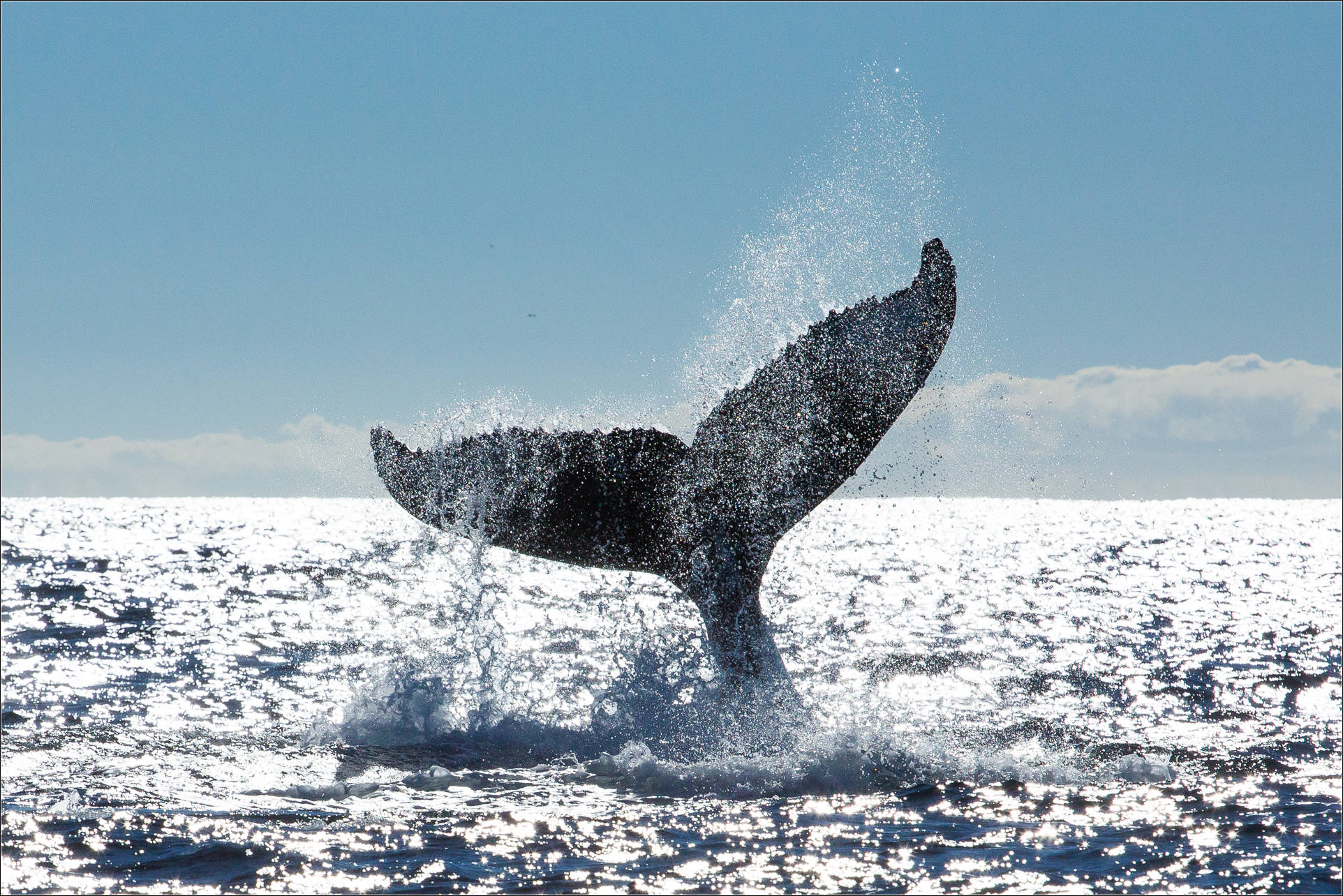
Image result for whale tail

A whale breaches and that elegant tail fin slowly sinks beneath the waves

A baby laughs

A dragonfly lands on a reed

Take a break, get comfortable, and close your eyes and think about all the different things that could be happening in the universe -

     Where are you?

           Make something happen – mundane or marvelous

                Let your mind roam outward from your daily self

                       Keep the feeling with you the rest of the day


Friday, September 30, 2016

WHO WOULD WANT ALL THOSE LAMPS?


Just wonderin’…

Who would want all those lamps?

When I was a kid, I’d sometimes watch a daytime game show. Many times the prize would be so many dollars’ worth of Quoizel Lamps. I’d think to myself “Who would want all those lamps? Don’t they already have lamps?” I could understand advertisements for things that got eaten, or used up like toilet paper, or even wrecked, like a car. But lamps? 

Even today, watching shows like “How It’s Made” I wonder who would want all those pocket knives, or wristwatches, or surf boards, other doo-dads. Don't surfers already have surfboards? I don’t need them, how come they make so many of them?  Dumb of me, I know, but the consumption of such things, I call them “things you didn’t know you didn’t need,” is still a mystery to me. It’s a good thing that there aren’t too many others like me, otherwise our economy would stagnate.

By very strange coincidence, my stepdaughter works for Quoizel and has done so for over twenty years. Good company – they make a lot of lamps.


Friday, September 23, 2016

HOW YOU GONNA KEEP 'EM DOWN ON THE FARM


Just wonderin’…

Remember the party standby, deviled eggs? Just plain deviled eggs. Today, according to a recent issue of Saveur magazine, they marinate the whites in soy sauce and raspberry vinegar - just for fifteen minutes, mind you - and then fill them with the yolks that were combined with lump crab meat, avocado, and apple.


Chefs are getting inventive. Food is getting fancy. I suppose that’s a good thing, yet I wonder what “comfort food” will be to generations to come.


Friday, September 16, 2016

O. HENRY

This is a brief piece I wrote for the Southern Writers series in our community magazine. O. Henry sure was an interesting character, and I enjoyed researching his life as much as I enjoy reading his work.

William Sidney Porter

Many people remember O. Henry around Christmas time, thinking of his classic short story The Gift of the Magi, but this writer was much more than the author of that one prominent piece. O. Henry was the pen name of William Sidney Porter, born in Greensboro, North Carolina, in September 1862.

A voracious reader from the start, Porter was a sketch artist and draftsman, a ranch hand and cook, a teller and bookkeeper, singer and musician, and a licensed pharmacist who also wrote articles and short stories on the side.
It was his job at a bank in Austin, Texas, that got him in trouble: he was suspected of embezzling funds and adjusting the books and was fired. A while later, the Feds audited the bank’s books and, long story short, they called for his arrest, he took off for New Orleans and then Central America, and, because the wife he’d left in Texas was dying, he went back and faced his sentence. Porter had had many stories published under a variety of pennames, but it was while he was in prison that he became known as O. Henry, the name he was using most often.

Porter, O. Henry, was a master of the twist at the end of the tale. In The Gift of the Magi, his short story most likely read by everyone during their school years, husband and wife sacrifice their one prized possession to get the other something to enhance that prized possession. In The Ransom of Red Chief, the kidnappers pay the boy’s father to take him back. In many stories, someone does a kind deed to help another, and then winds up suffering for it. In others, the person doing the good deed, though he was formerly a criminal, is let off because of the deed.

In his short lifetime, Porter died at 47, he wrote hundreds of stories. Many were originally published in collections of his works such as “Cabbages and Kings.”  His more famous stories are usually included in American short story anthologies, and in high school English texts as great examples of irony.


Two interesting notes:

In Honduras while evading his prison term, in one collection of stories he wrote, Porter coined the phrase “banana republic, now defined as “a small nation, especially in Central America, dependent on one crop or the influx of foreign capital.”

And, like the S in the name of Harry S. Truman, the O in O. Henry is a compromise of sorts, and just stands for itself.


Friday, September 9, 2016

HIGH SCHOOL BAND REMEMBERED

A Screenshot of what was our old high schol


I am not a fan of most free verse, but this one literally caught my eye on The Writer’s Almanac because I could take most of it in in one look. It struck a familiar note.


The High School Band in September

On warm days in September the high school band
Is up with the birds and marches along our street,
Boom boom,
To a field where it goes boom boom until eight forty-five
When it marches, as in the old rhyme, back, boom boom,
To its study halls, leaving our street
Empty except for the leaves that descend to no drum
And lie still.
In September
A great many high school bands beat a great many drums,
And the silences after their partings are very deep.


I know we weren’t up with the birds, but in my freshman year of high school, whenever it was that we had to practice for a parade, we too had to march from the high school down the block to the small playing field that was surrounded by houses. Boom, boom, boom. The next year we were in the new high school, a mile away and much closer to where I lived, with extensive playing fields for our marching. I've written about Being in the Band and marching at football games.

I had to refresh my memory and take a look at that old high school on Google. It’s now an elementary school (I knew that.) but from the air it looks like it had extensive renovation, and a lot of old homes were sacrificed for its expansion. The houses in the back gave way to the expanded building and a paved play area. The old field is still there. Where there were houses across the street from the front of the school, there is now half a block’s worth of playing field. Nice.


Thursday, September 1, 2016

THE TIDE RISES, THE TIDE FALLS

Monterey, California - 2001
Does the tide know what year it is?

On March 6th of this year, The Writer’s Almanac featured this poem by Henry Wadsworth Longfellow. (And can’t you just hear a child, about to recite one of Longfellow’s poems, give the title and the poet’s whole name: “…by Henry Wadsworth Longfellow.” They are so proud to have memorized his whole name, much less the poem.) I’d never before had the pleasure to read this poem of his. It speaks to me of the relentless passage of time and tides. It could speak of any time, even today, except for that one word, hostler, that gives it a place in a time long ago.


 The Tide Rises, the Tide Falls


The tide rises, the tide falls,
The twilight darkens, the curlew calls;
Along the sea-sands damp and brown
The traveller hastens toward the town,
     And the tide rises, the tide falls.
Darkness settles on roofs and walls,
But the sea, the sea in the darkness calls;
The little waves, with their soft, white hands,
Efface the footprints in the sands,
     And the tide rises, the tide falls.

The morning breaks; the steeds in their stalls
Stamp and neigh, as the hostler calls;
The day returns, but nevermore
Returns the traveller to the shore,
     And the tide rises, the tide falls.


Friday, August 26, 2016

THE HAIRCUT


This is how he'd like is hair to look - but that was 32 years go!

I love it! Frank has been pissin’ and moanin’ all week that this was the worst haircut he ever got. Then Rich was here to change the air filter on the car, and the first words out of his mouth were “Gee Dad, I like your haircut.”  That’s what I kept telling him – it looks great! – but curmudgeon that he is, he likes it longer. Oh, well. We'll think of it as a "summer cut" until it grows in.


Friday, August 19, 2016

FIND YOURSELF IN A NATIONAL PARK

NATIONAL PARK SERVICE CENTENNIAL – August 25, 2016 - and I wrote this article for our community magazine. Have you seen and heard the advertisement running for the National Parks Service? I love it! It's Happy Birthday, with each note of the song taken from a sound from the parks - from a chickadee's chirp to a lighthouse fog horn, from a floor polisher at the Smithsonian to the sound of the cast of a fly fishing lure. Very clever.  See and hear it here.


One hundred years ago this month, the National Park Service was created “to conserve the scenery and the natural and historic objects and wildlife therein, and to provide for the enjoyment of the same in such manner and by such means as will leave them unimpaired for the enjoyment of future generations.”  There are fifty-eight national parks in the National Park Service, the majority of them west of the Mississippi in the wide open spaces. As you would expect, the largest park, Wrangell-St. Elias, is in Alaska. Alaska boasts eight national parks. Hot Springs in Arkansas is the smallest, and is the only national park within an urban area. Arkansas, like South Carolina, has only one state park.  Many states have none.

Though this is the centennial month of the National Park Service, it is said that October is the best month to visit a state park. The crowds have thinned out and the weather is excellent. This is a good time to begin planning for a fall visit to a national park. There are only a dozen national parks east of the Mississippi. Nearby, just east of Columbia, our state boasts Congaree National Park, a temperate climate swamp, with some of the largest hardwood specimens in the country. Great Smoky Mountains National Park is just under three hours away from us in Sun City Carolina Lakes. Both are ideal destinations for autumn day trips.

Frank at South Carolina's only National Park  the swampy Congaree
Further exploration of any of our national parks will require more than a day trip. Shenandoah National Park is a drive of about five hours – you wouldn’t want to do that in a day, and Everglades National Park, the largest subtropical wilderness in our country, is at least eleven hours by car. A bit further south, historic Biscayne and Dry Tortugas National Parks, the latter accessible only by seaplane or boat, are home to marvelous marine areas for snorkeling, camping and other outdoor recreation.

Pit a pin in a map where Nevada and Colorado meet Idaho, and you will be surrounded by national parks out west: little ones like Great Basin in Nevada, and big ones like Death Valley, the largest in the contiguous states, and our first national park, Yosemite. You are almost spoiled for choices out there. West of the Mississippi, on the mainland, there are three dozen national parks. You are sure to be able to visit several of them in one well-planned trip.

Yellowstone's Old Faithful. Old Faithful was on my list of places to see,
and I'm happy to say experienced it. 

But more than overseeing the national parks, the National Park Service, under the Department of the Interior, is responsible for forts, battlefields, military parks, monuments, historic sites, and trails, be they large and small, in all fifty states. They see to places like Ellis Island and the Appalachian Trail, and Gettysburg and Kitty Hawk in the east, and Mesa Verde, Little Big Horn, Alcatraz and the Muir Woods in the west. A full state by state listing of the sites they administer, sites to which you might want to plan a trip, can be found at their website. Simple to remember: nps.gov.
 
Teddy Roosevelt's home, Sagamore Hill, was the closest National Park Service site
to where I lived on Long Island. I was always fascinated by the house and its furnishings
 - well, maybe not so much by all the animal trophies.
From my first visit there, I was always delighted to visit another old house, mansion, castle - anything that taught me how other people lived in times gone by throughout the world.


Friday, August 12, 2016

FEW AND FAR BETWEEN


                  MAINTAINING SUNDAY BEST


When we were much younger, there was a nice array of local shops to help us maintain our Sunday-best wardrobes. While we may fondly remember them and, on occasion, wish them back, today such shops are few and far between.

Do you remember the shoe maker, the cobbler, and getting your shoes resoled and heeled? Remember the unique aroma of shoe leather and polish? Did you ever go there just to get your shoes shined?  Did you ever go there to have your shoes made?


Do you remember the good drycleaner? A trip to the drycleaner was a weekly thing in many households. Many shops had a tailor on their staff, but sometimes a good tailor had his own shop. While there are still drycleaners round, with today’s large selection of clothing sizes, alterations are almost a thing of the past.

Do you remember the ladies dress shop with just one or two of the “latest numbers” in the window? Do you remember putting together an “ensemble” for Sunday-best? Do you remember the haberdasher? It was usually conservative, somber, and quiet in both activity and choice of colors. Even the ties were muted. Do you remember the shoe store?


Department stores, malls, and on-line shopping have done away with most of these shops. Most of us no longer wear our shoes and clothes for years and years. Our things rarely wear out. We tire of them and pass them on to a charity. Now our closets are packed and our clothes have clothes, but it is just the way we are, not the way we wore were.


Friday, August 5, 2016

SUNDAY BEST


Easter Sunday Best in the 50's. My dress was dark pink my sister's was pale pink.
(I hated that dress!)(My brother doesn't look too happy here either.)
After church and the chocolate bunnies, Easter Sunday picture-taking
was one of my mother's rituals. 


On one recent morning, the staff of our community magazine were batting around ideas for our often-printed article theme of “Do You Remember…?” We got to talking about what we once wore for a plane trip, or to church, or to work. There were various levels of dress, from “just got out of bed” to “Sunday Best.”

Staff members remember the men in their families going off to work in suit and tie, or even in overalls, jacket, shirt and tie. And, bowler or fedora, they always wore a hat. Men’s hats seem to have gone out of favor when J.F.K. went around without one. Women’s hats stayed in favor longer because Jackie Kennedy wore them.

Not a hard hat to be seen!  You can be sure that this was in the 30's, long before OSHA

Sundays might have found women in a neat suit, but they usually wore dresses. House dresses, day dresses, Sunday-best dresses. And aprons too. Most of us can remember June Cleaver or Margaret Anderson, pertly and appropriately dressed, apron in place, and usually wearing high heels. Today we shake our heads at this style of dress. Just think of all the ironing! Just think of housekeeping in those high heels!

Thr caption on this one from Google was "retro vacuuming."  I'll say it's retro!
I'm glad that those days are long gone.

Adult men of all ages seem to have dressed similarly, but with women it was a different story. Mothers usually wore open shoes, be they high-heels or flats, and Grandmothers usually wore black lace-ups with chunky heels. Actually, some women of those years, thank you Kathryn Hepburn, did wear slacks every day. Grandmothers? Never.

Do you remember bobby sox, saddle shoes, penny loafers, poodle skirts, the craze for grey and pink? Do you remember, of course you do, miniskirts, bell bottoms, go-go boots, and Nehru jackets? Clothes seem to be less faddish these days.

Holey socks, you can still get poodle skirts!
I never had one, didn't miss it at all. 

“Sunday Best,” the dress code easily understood by all, was the thing to wear on most special occasions. We wore Sunday-best to go to anything a bit more special than what we did every day. We dressed up for a plane trip, with hats and gloves and matching luggage. Same for a long trip by car or train. We always dressed somberly for funerals. It was just what was “done.”

Today, what is “done” is frequently “anything goes.” It is still true that we are judged on our attire, however unconsciously and silently, by others. We still want to spruce up to go out to dinner, but the dress code is casual. But then, now we dine out much more casually and frequently than our parents did. We seniors may think that standards are slipping miserably, but then seniors in any era probably thought the same thing.

This one's from The People of Walmart.
Walmart's dress code is "Anything Goes." and you
know there are worse getups than this one.


Are we any worse, or any better, for these changes? No, we are status quo. Today’s social standards and mores have evolved and developed along with technology. We have a wider availability of goods and services and the money to pay for them, and, especially in wash-and-wear, a vast array of clothing choices.


"Clothes make the man. Naked people have little or no influence on society."
Mark Twain 


Wednesday, August 3, 2016

SOMETIMES I WONDER

The original Rocking Horse, made of maple from our own property.
hat's our oldest grandchild. She now has children of her own.

One morning recently, one of the bloggers I read each day wondered about a very old book of fables she’d purchased at the brocante. The little volume, recovered in fabric, was printed in 1803. It’s a wonderful pastime to wonder where such treasures have been all these years. Who touched them, took care of them, and passed them on.

A later version, this one made of cherry.
Our second brood of granddaughters have this one. 

I often wonder what will happen to some of things Frank and I have. I wonder what, in years to come, people will make of the monogram he burned into most of the wooden objects he made. It’s a J combined with a capital Ã…, for Ã…sgard. (In the 80’s, we moved to a place where there were no house numbers, so the folks there named their homes. We chose Ã…sgard, home of the gods. As in ye gods!?)

Katie again with her doll buggy and her scooter.

From small boxes to a grandfather clock, from kitchen utensils to Stickley or Shaker style furniture, of all the things he’s made, and we have albums full of pictures, the things I wonder most about are the toys. Yes, who will admire them and wonder who made them, who will touch them, play with them, cherish them, and pass them down to their own grandchildren as they will be passed down from us.


Katie's mom had some professional pictures done of her and her toys.
Who'd have thunk that the hay wagon would really ever hold hay?