Friday, June 24, 2016

TWO ONE-OFF AUTHORS - - - - - TWO CLASSIC NOVELS - - - - - TWO CLASSIC MOVIES


Here's one that I wrote for the June issue of our community magazine.


In the world of literature there are several famous authors, among them Edgar Allen Poe, Oscar Wilde, and Boris Pasternak, who, though they wrote in other forms, wrote only one novel. Also among those few are two southern writers, two very different personalities, Harper Lee and Margaret Mitchell.

To Kill a Mockingbird and Gone with the Wind: two Pulitzer Prize winners. Just to read the names of the novels brings the stories to our minds. Many people have read both books, many only one, yet most of us have seen both of the movies. Gregory Peck’s Atticus Finch, Vivien Leigh’s Scarlett O’Hara, both Academy Award-winning roles, and Clarke Gable’s Rhett Butler, for which he was nominated for the Academy Award, are three unforgettable, iconic characters. The movies are two that will never, should never, be remade.


There’s been quite a bit of attention paid these days to Harper Lee, to To Kill a Mockingbird, and to the recent publication of Go Set a Watchman, Lee’s original version of Mockingbird. Though it set a record for pre-orders from Amazon, once it was read, Go Set a Watchman was not too well received by today’s readers. They know Mockingbird too well, they know Mockingbird’s Atticus Finch too well, and they judge by moral and ethical standards that have matured somewhat in the last fifty-five years.

Watchman is not a “sequel” to Mockingbird, nor is it Lee’s “second book” as it was described by the publishers. It is the original book, the one-off book that was heavily revised by the author and her editor, Tay Hohoff, to become To Kill a Mockingbird. In Watchman, Atticus is a segregationist and the story is told from the point of view of an older Scout; in it, Tom Robinson is acquitted and Scout’s brother Jem has died. Writing students and literary critics are having a field day comparing the two versions.


The current interest in Gone with the Wind (GWTW as it is known in print) surrounds this month’s 80th anniversary of the publication of the book in 1936. Compared to around 300 pages for the localized, intense story in Mockingbird, the scope of GWTW, somewhat of a historical romance, is as large as its 1,037 pages. It is a story of the Civil War years in Georgia, Sherman’s destruction of Atlanta, and the effects on a young, spoiled, southern belle during those years.


The impact of GWTW was tremendous and prize winning. It sold millions of copies and is still in print. The impact of the movie, winner of eight Academy Awards was just as great. Among the great scenes filmed in this first picture in color to win for Best Picture, the scenes of the burning of Atlanta are most memorable. When seen on the big screen it had a huge impact on its audiences. Every few years, the movie is re-released in theaters to celebrate milestones in the book’s publication and the movie’s original showing.]


Nelle Harper Lee, who died this past February, never married. She was a very private person, rarely granting interviews, content to spend her days at home in Alabama in the town where she was born. There are many autobiographical aspects in Mockingbird. For instance, Lee’s own father was a lawyer, her mother’s maiden name was Finch, and her friend Dill in is based on her real-life life-long friend Truman Capote.


Margaret Mitchell, born in 1900, a deb in Atlanta during the “Roaring Twenties,” was once engaged to five men at the same time, and had two husbands. Among her many and varied interests and writings, Mitchell wrote feature articles for The Atlanta Journal. She suffered a broken ankle that wouldn’t heal properly, so she spent weeks in bed or hobbling around. Complaining about having to fetch and carry books for her to and from the library, her husband quipped “For God's sake, Peggy, can't you write a book instead of reading thousands of them?” So she did, and Gone with the Wind was the result.


Friday, June 17, 2016

FAMOUS GRANDFATHERS


1991 - Katie and her Grandpa Say messin' about on the Kinderhook Creek.
Say is now Great-grandpa Say to Katie's children.

As with May’s Grandmothers, famous Grandfathers abound. Just think of the Bush family, the Kennedy family, the Barrymores, the Fondas, and, of course, Prince Phillip.

Grandfathers can be curmudgeons or cream puffs – or a bit of both. Was your grandfather an old curmudgeon? Did you have a stern Grandfather, or a jolly one?  Every once in a while did he drop a question on you: “Ever hear the story pf the dirty shirt? That’s one on you!”  Ha ha ha! Through the years, he probably had several bits of wisdom to pass along to you.

What did you call your Grandfather? A dignified Grandfather, or Grandpa, Gramps, PopPop, Opa, Abuelo, Ojisan, Grand-père, Nonno, maybe Bubby or even Grumpy? Were you allowed to name him, or was it just what everyone else called him?

Grandfathers delight in passing down the things they love to do. Many times they’re the things the parents are just too busy for now, but will probably pass on to their grandchildren when the time comes. Kids love to follow Grandpa into his workshop, be it wood, metal, garage, or even into the kitchen. They especially love to help him in the garden. Many a baby vegetable has been sacrificed in the pursuit of helping to pull weeds.

Children love to go on trips, one-on-one if possible, with their Grandfathers. They love it when he takes them fishing, or sailing, or even to meet up with an old pal. They love to just mess about with him, fix this or that, maybe go down to the stream or go get an ice cream in town.

The majority of us Seniors have grandchildren, and having them, especially if they live nearby, is one of our great delights.

J.V Milne and his Grandson, Christopher Robin. Oh, and Pooh is there too.


Here are several quick quotes by and about grandfathers:

Now that I'm a grandfather myself, I realize that the best thing about having grandkids is that you get the kid for the best part of the ride - kind of like owning a car for only the first 10,000 miles. You can have your grandchildren for a couple of days and then turn them back over to the parents. -- Willard Scott

There are fathers who do not love their children; there is no grandfather who does not adore his grandson. --Victor Hugo

To a small child, the perfect granddad is unafraid of big dogs and fierce storms but absolutely terrified of the word boo.  -- Robert Brault

More and more, when I single out the person out who inspired me most, I go back to my grandfather.  -- James Earl Jones


What children need most are the essentials that grandparents provide in abundance. They give unconditional love, kindness, patience, humor, comfort, lessons in life. And, most importantly, cookies.  -- Rudolph Giuliani


2009 - Say is known to this granddaughter as PopPop.


Monday, June 13, 2016

93 BILLION LIGHT YEARS

The Andromeda Galaxy. The closest galaxy to us, it is only 2.54 million light years away.

Article in today’s BBC News tells us that astronomers have now calculated the size of the universe. The long but interesting article relates how they came to their current conclusion that the diameter of the universe is 93 billion light years. (Not miles: light years. A light year is the distance light travels in a year, or about 6 trillion miles. Do the math?) Those of us who remember a bit of high school geometry will realize that nothing was said about the circumference or the area of the universe. 93 billion is a big enough number, especially if it is multiplied by 6 trillion. That comes to a number in the sextillions. When they use the word 'astronomical' they really mean it. Only astronomers can think in that kind of numbers.

Just think on this: our own Milky Way galaxy, which over time has been estimated at various sizes, originally with the Earth believed to be at its center. It is now known to be about 100,000 light years across – give or take a few light years.

The Fornax Cluster of galaxies. With some stars from our own galaxy in the foreground, each of those yellow dots is a galaxy in itself.  This is about 62 million light years away.

For those of us who regularly deal in miles or kilometers, or even the length of a city block or a football field, light years are almost mythical. To bring it down to earthly size, I suppose the Earth is not the seed in the watermelon or the flea on the dog, it’s probably not even like the proverbial grain of sand on a coral beach. No, I’d guess we’re more like the atom of carbon in that grain of sand.


Makes you start thinking about the bigger picture - about all the now seemingly insignificant problems besetting our planet, and the relatively insignificant beliefs we hold. Start thinking about all the beings who most assuredly populate the countless worlds between us and the edge of the known, ever expanding universe. How do they live, what are their problems, who are their gods? Thoughts like this shouldn’t keep you up at night. Maybe, if you pursue them in depth, they'll put you to sleep.

Our own Milky Way galaxy. We see it from the inside.


Photos from Astronomy Picture of the Day - apod.nasa.gov


Friday, June 10, 2016

BALLPOINTS


I leaned by today’s National Day Calendar that today is National Ballpoint Pen Day. It’s the anniversary of the day in 1943 when the ball point pen was patented. Remember those first ballpoints? They blobbed all over whatever you were writing. They certainly have improved over the years. Though I write perhaps once check a month now, I use one of those special gel pens. Heaven forbid someone alter my check and use it for nefarious purposes.

Other than that check, and my daily solving of the New York Times crossword puzzle, I’ve little use for a pen these days. Most of what I write is done electronically. I make notes in pencil on little pieces of scrap paper, and I write my initial grocery list in chalk on a slate. True.


I always have to laugh when people tell me they are going over to the quarterly Vendor Fair at our community center. They go to get the free ballpoint pens. Perhaps they are using them as décor. (?)


Perhaps they are ballpoint pen artists.  Nah – I’d know by now if they were.


Wednesday, June 1, 2016

GEORGE, WHO PLAYED WITH A DANGEROUS TOY - - - A POEM FOR THE FIRST OF JUNE

I don't recall where or when, but in the last few months I came upon this poem by Hilaire Belloc. I'd never read it before. The poem has a lilting rhyme, a great story to tell, and I get a wonderful visualization of it all. 


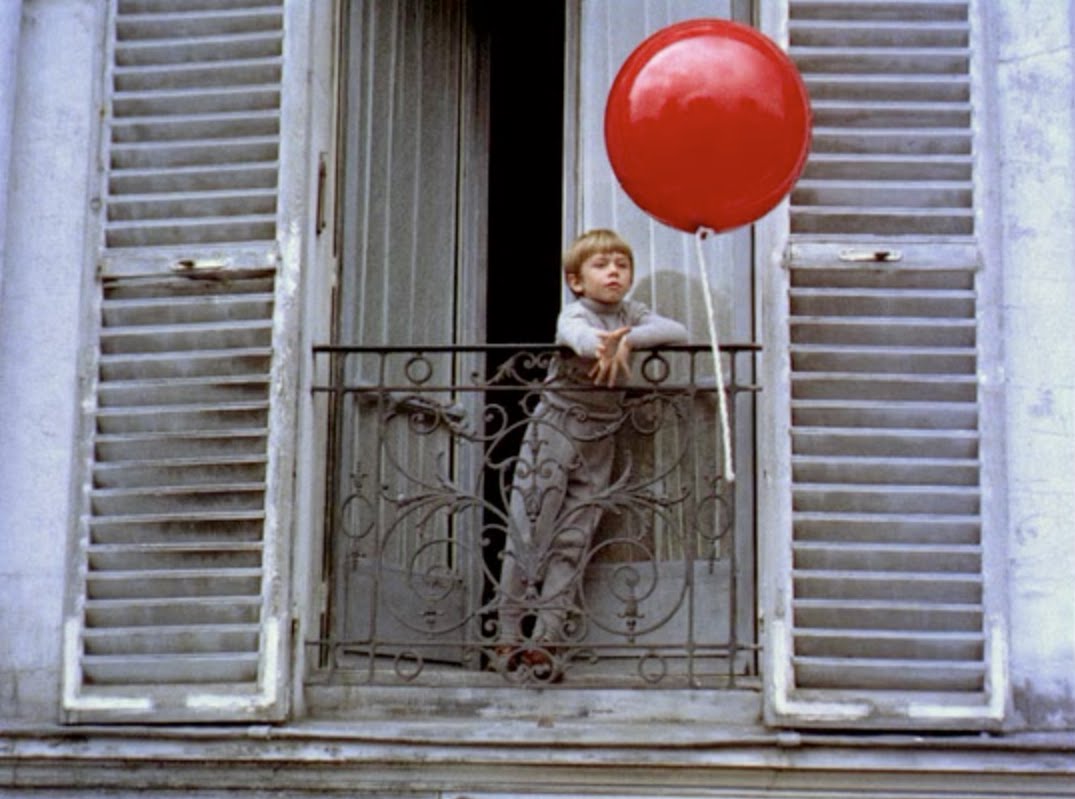
Did you ever see the movie The Red Balloon? It is one of my all time favorites. I wanted a picture of a big red balloon for George, and I came upon this picture from the movie. I think George's balloon was bigger, don't you? 


George, Who Played with a Dangerous Toy

            And suffered a Catastrophe of considerable Dimensions

                                                         by Hilaire Belloc


When George’s Grandmamma was told
That George had been as good as gold,
She promised in the afternoon
To buy him an Immense BALLOON.
And so she did; but when it came,
It got into the candle flame,
And being of a dangerous sort
Exploded with a loud report!
The lights went out! The windows broke!
The room was filled with reeking smoke.
And in the darkness shrieks and yells
Were mingled with electric bells,
And falling masonry and groans,
And crunching, as of broken bones,
And dreadful shrieks, when, worst of all,
The house itself began to fall!
It tottered, shuddering to and fro,
Then crashed into the street below—
Which happened to be Savile Row.
When Help arrived, among the Dead
Were Cousin Mary, Little Fred,
The Footmen (both of them), the Groom,
The man that cleaned the Billiard-Room,
The Chaplain, and the Still-Room Maid.
And I am dreadfully afraid
That Monsieur Champignon, the Chef,
Will now be permanently deaf—
And both his aides are much the same;
While George, who was in part to blame,
Received, you will regret to hear,
A nasty lump behind the ear.
Moral:
The moral is that little boys
Should not be given dangerous toys.

 
Ah, George - tant pis!


Saturday, May 28, 2016

JOHN SINGER SARGENT

As I blogged yesterday, Sargent is the painter of one of my favorite works, Fumée D’Ambris Gris. 


Carnation, Lily, Lily Rose - one of Sargent's most popular paintings

How elegant! 160 years ago this year, the painter John Singer Sargent was born in Florence, Italy, to nomadic American expats. Sounds romantic, but the truth is a bit sadder. Sargent’s parents became wanderers, trying to recover after the death of their firstborn, a daughter.  Once their son and then another daughter were born, his father resigned his position as an eye surgeon in America, and the family settled down to a life of travel throughout Europe.

An active and interested boy, Sargent had no formal education other than what his parents gave him in the way of basic school lessons and the wide benefits of European culture. Sargent was fluent in several languages, was widely read, widely traveled of course, and, having inherited the artistic skills of his parents, was himself an accomplished artist, as well as a fine musician. 


the charming Ruth Sears Bacon

Portraiture was the preferred artistic expression of the days of Sargent’s youth, the Victorian Era. He began formal art studies with a well-known portrait artist, and then won a place at Paris’ prestigious École des Beaux-Arts. Though not yet fully into the era of the Impressionists, artists of the time were working with paint and their techniques in new ways. Portrait artists, most of all, wanted to break out of the strict confines of the traditional poses for their subjects. Sargent excelled at landscapes, but portraits brought in the money and the publicity – he found ways to combine the two, making each more interesting. He brought interior and outdoor landscapes to his portraits, and introduced people into his landscapes. By the age of 51, Sargent, who was very popular and could charge very high prices for his portraits, was able to bid good-bye to portrait painting and concentrate almost exclusively on his landscapes.

From the outset of his career, and continuing on to this day, the discussion and criticism of Sargent’s paintings has stirred the art world. Is this or that painting an allegory, is there anything sexual or amoral about them, how did his techniques change, how was he influenced by the old master painters, how was he influenced by the modern Impressionists and Cubists with whom he associated? 

The Daughters of Edward Darley Boit- a family portrait like no oher

To the majority of those who see and enjoy his paintings today the answer is “who cares?” His vast output included thousands of oils, watercolors and drawings. His works are classed as “American Renaissance,” and there is just something about his paintings that people like. They’d be comfortable to have a landscape or portrait of his hanging in their own homes. Art print dealers do a brisk business in copies of his works.  Look at pieces like Carnation, Lili, Lily, Rose, or Fumée D’Ambris Gris – not formal portraits. Look at Ruth Sears Bacon or at The Daughters of Edward Darley Boit -  portraits that are more than portraits. Look at The Oyster Gatherers at Cancale, and you’ll see why Sargent’s works are so popular today.


The Oyster Gatherers at Canca

Friday, May 27, 2016

FUMÉE D'AMBRE GRIS - REVISITED...


...and I wish I could revisit it now!


When the request went out at one of our Living magazine meetings to do a piece on John Singer Sargent, I was happy to volunteer, especially since I'd blogged about his painting two years ago. Sargent, you see, was the creator of one of my favorite paintings Fumée d'ambre gris (Smoke of Ambergris). (More about Sargent tomorrow.) The painting resides at the Clark Institute in Williamstown, Massachusetts. When we lived near there for over twenty years, I was a frequent visitor to this particular place and piece.

When I first saw the painting, a majestic 64½” x 45½”, rightly voted by museum-goers as their favorite painting during the Clark’s 50th Anniversary celebration, I could get right in front of the painting, even touch it if I’d been so stupid, but I wasn’t. (A few years later, when it came back from a tour of Sargent’s paintings, they’d moved it to a more secure location and put a guard rail a good bit away from it, outside of touching range, but also, for me, out of study range.)  There is so much to see in the painting: the simplicity of the scene, the grace of her hands, and the questions of why she is censing herself, where she is, and what are the clothes she is wearing?

What absolutely amazed me was the way Sargent depicted silver and shine – the silver of the brazier and her jewelry, the shine on her polished fingernails. I’m sure I’d seen the same effects in many pictures before, but this was the first picture where I was close enough to see the brush strokes. Whew! I was absolutely bowled over, I tell you. Close up: just strokes of white paint; far away: silver and glint.


I’m sure that in your life you’ve come upon a thing or two that amazed you – this was one of mine.


Wednesday, May 25, 2016

STILL HAYWIRE


This morning I was reading on the BBC News about a man who didn’t realize that his mind was blind. He can’t make mental pictures, can’t visualize anything. The interesting article had me remembering a blog I posted four years ago. I thought I’d rerun it for you today. Researchers are discovering more and more about our brains. It’s a fascinating subject.


“The more we discover about the circuitry of the brain, the more we tip away from accusations of indulgence, lack of motivation, and poor discipline—and toward the details of biology. The shift from blame to science reflects our modern understanding that our perceptions and behaviors are steered by deeply embedded neural programs.”


So now I know why I am as I am: the above quote from an article in The Atlantic, “the Brain on Trial”, tells me that my brain’s circuitry is wired a certain way: my way. I suppose I am fortunate that my brain isn’t wired to make me a sneak thief or a murderer, or even on a milder basis, a gossip or hypochondriac.  Now I know what happens when I stand in front of the refrigerator looking for a snack: intellectually I know I should shut the door because I really don’t need the snack, but my circuitry overrides it all and I go ahead and eat. “I can’t help myself.” Well, I could, but I rarely do.  For such a relatively smart person, this is really dumb.

They call this a brainbow, and it shows
nerve activity
These latest discoveries about our biological makeup are opening up a huge can of worms. We’d think that intellectually, likely taught as youngsters, criminals would know right from wrong. What they know and how they behave are two different things – but should they be punished for how they act?  How their brains are wired? The worlds of medicine, law, and ethics are going to have to hash this out. 

Until these recent discoveries, criminals were criminals and were punished according to the law. Now, much like with the insanity defense, it will be a question of the criminal’s wired state of mind. No more: “he’s depraved on accounta he’s deprived.” It’ll be “he’s depraved on accounta he’s not wired too tight.” The wiring’s the thing.

Yes, I know this is a Phrenology bust, but even though it 's
about the outside of the head, not the inside, I'd never seen
such a thing before I visited Historic Brattonsville. I've been
saving this photo for quite a while. Today is the day to use it.
In the near future there may be laws not for pre-marital blood tests, but pre-marital mental tests. They say that DNA testing may be able to tell us a child’s future proclivities - that’s one of my favorite fancy words for habitual tendencies or inclinations.  Another can of worms: what will society do when confronted by evidence that a child may grow up to be, shall we say, anti-social?  Hoo-boy! 

So now that I know I think the way I do because it’s the way I’m wired, boy would I like to get inside and rewire some other folks brains. Unfortunately I can’t do that, so I’ll just have to be more understanding about the less-than-lovely traits of others. I’ll just have to say “Poor dear, she really can’t help herself. She’s wired that way.”  And I guess they’ll say that about me too!


Later…
…while googling for brain-wiring illustrations to accompany this essay I came upon The Connectome: A New Way to Think About What Makes You You, also in The Atlantic. I first read that to be connect-to-me, and actually it does connect to me.  The article gets into a little more serious stuff than I wanted to cover in my light essay, but it is quite intriguing.

Friday, May 20, 2016

THE POETRY YOU DIDN'T KNOW YOU KNEW


April is the poet’s month. It provides them with inspiration: everything from Wordsworth’s daffodils to Chaucer’s “shoures soote,” his sweet showers. Now here comes May, the lyricist’s month. Though their work be lyric, not all poets are or were lyricists – but all lyricists are poets. Well, maybe not some of these modern fellas. Most of Lennon and McCartney, yes. Most of the current lyricists, doubtful, at least to most of the seniors around us. With some of the newer stuff it’s hard to make out, much less understand, the words being sung. There are exceptions in every instance, but we’re here to appreciate something about which we’ve usually given little thought: the beauty of the words to the tunes we love.

What’s your favorite song? What is “our song” to you and your spouse? Are you humming right along when you hear what’s playing in the supermaket? Songs from the Big Band Era, Country & Western, Blues, Folk, and Rock and Roll – pick one, it’s probably a poem set to music. Or is it music set to a poem?


Like the chicken and the egg, it isn’t always evident which came first, the lyric or the music.  For duos like Richard Rogers and Oscar Hammerstein it could go either way – Rogers wrote the music, Hammerstein took care of the book and the lyrics.  For writers like Cole Porter or Johnny Mercer they came almost simultaneously: as a rule, both wrote both the music and the lyrics, and who could say which popped into their heads first for any one song.


But we’re here to appreciate the poetry in the songs – especially the love songs. Here are two fine examples. Think of Sinatra singing -  

         You go to my head
         With a smile that makes my temperature rise 
         Like a summer with a thousand Julys 
         You intoxicate my soul with your eyes
or     
         Night and day, you are the one
         Only you beneath the moon or under the sun –
         Whether near to me or far
         It's no matter, darling, where you are
         I think of you day and night”

Now, those lyrics are poetry. Rhyme and meter: all the hallmarks of a lovely poem. Ah, you like free verse? Did you realize that the words to Moonlight in Vermont don’t rhyme?  As all poetry should evoke a distinct feeling, emotion, or mood, or give us a mental snapshot, these lyrics paint a picture of the seasons:

Pennies in a stream - Falling leaves a sycamore - Moonlight in Vermont
Icey finger waves - Ski trails on a mountain side - Snowlight in Vermont
Telegraph cables, they sing down the highway and travel each bend in the road.
People who meet in this romantic setting are so hypnotized be the lovely...
Evening summer breeze - warbling of a meadowlark - Moonlight in Vermont

So next time you hear or sing a great song, a song from most any era, pause to appreciate the craft of the lyricist and the words that go so well with the tune. (Or does the tune go so well with the words?)


Monday, May 16, 2016

MANHATTAN – OR NEW YORK, N.Y., AS THE POST OFFICE PREFERS IT


“We’ll have Manhattan, the Bronx and Staten Island too.” Can’t you just hear Ella Fitzgerald singing that classic? I wonder what Peter Minuit would have thought had he heard the song in May 1626, 390 years ago, when the Dutch bought Manhattan Island.

A hundred years before, Giovanni da Verrazano, working for the French, had explored in the area on board La Dauphine, and had given names to many of the places he saw. Naming is not claiming, and he sailed on, only to be eaten by cannibals elsewhere. He left only his own name to be given to a bridge connecting Brooklyn to Staten Island four hundred and forty years later.

No beads: beads they had. And none of those other trinkets either.

The Dutch knew a good place when they bought it. Fish and game were plentiful, the climate was favorable, and the natives were fairly friendly. Abundant furs were available from the vast territories to the north and west. 

The Dutch already had a fur trading settlement on what is now Governors Island, and had started a fort on Manhattan when they probably decided that they should buy the place. The legends say Minuit bought Manhattan for trinkets, beads. Not beads: beads they had. The deal was done in trade goods, worth about 60 Dutch guilders, worth a few thousand dollars in today’s money. The Canarsie people got the goods, but they didn’t live there. Like countless thousands of people today, they only worked there. They lived on Long Island and commuted regularly, and sold land that really wasn’t theirs to sell. American Indians had no concept or traditions for possession of the land. Their idea of the transaction surely differed from Minuit’s purpose to establish the colony of Nieuw Amsterdam. When you think of the value of New York City land today, the increase in value is staggering.

“So good they named it twice!” The U.S. Postal Service would like you to use the designation New York, New York, not Manhattan, in your correspondence. The most densely populated of the boroughs of the city, and even more packed when the commuters pour in, New York is the financial and cultural capitol of the United States. It is home to Wall Street, Broadway, and the United Nations, and many of the Fortune 500 companies associated with financial, cultural, and international commerce.

Manhattan Hot Spot

Many would picture the island as flat, if they think of that at all, but the name Manhattan is a derivation of the Lenape words for “island of many hills.” They say that New York is the city that never sleeps, but it does seem very sleepy very early on a Sunday morning. Normally, there is so much to see and do there that the shape of the island is the last thing you notice. With only an occasional taxi cruising by, I once stood on one of the main avenues, looking north, and saw the parade of street lights rolling up and down as those hills climb toward the top of the island. Peter Minuet would be astonished. I was!


Friday, May 13, 2016

REMEMBERING GOOD HOUSEKEEPING


The Writer’s Almanac last year on May 2nd said: “Good Housekeeping magazine went on sale for the first time on this day in 1885, offering housekeeping tips, parenting advice, product reviews, and fiction. In 1900, the magazine developed the Good Housekeeping Experiment Station to test and evaluate consumer goods and foods for the benefit of the magazine's readers. Products that passed the magazine's standards were given the "Good Housekeeping Seal of Approval," and anyone who wasn't satisfied by one of the approved and advertised products could obtain a full refund. In a time before any regulatory or consumer protection agencies, the Experiment Station performed an important public service, and its tests raised concerns about smoking, overeating, and preservatives before anyone else.”

Fiction in such magazines is a thing of the past

My mother subscribed to Good Housekeeping for years. Today, it’s not a magazine that has much appeal for me, but from when I was a young teen I usually read each issue that came into the house. Along with what my mother taught me, it was my source, and probably the reason for a lot of what I do today. I especially remember the Taylors. Emily Taylor talked about things around the house, like new products, appliances, and furnishings. As I recall, her husband wrote about how to fix things. There were good stories, recipes, decorating ideas.

Today I look to the many other printed and on-line testing reports to make and needed decisions about what products to buy, but I smile when I see a product has the Good Housekeeping seal of approval.


Friday, May 6, 2016

FAMOUS GRANDMOTHERS


Probably the most loved grandmother photo of our time.

What did you call your grandmother? Grandma, Gramma, Granny, Mimi, Oma, Mima, Abuela,
Grand-mère, Obaasan, Nana, Nona, Bobe?  My granddaughters call me Grammy.

If you were from a very large family, you were often just one of the bunch of kids running around at any family gathering. Grandmothers didn’t usually show favorites on those occasions. But get her alone? Ah, that was different. You’d get a body hug as she held you close to her aproned side and touched your head or gently tugged on your ear.

Grandmother memories are, for many of us, some of the “comfort food” of our adult lives. We remember her and we try to pass on her love.

Grandmothers were usually great cooks – at least in our memories. You might still cherish that recipe for her meat loaf that she hand-wrote for you when you were first cooking on your own. You might even be wearing her wedding ring, or keep something treasured that she passed down to you. What she passed on to you might be the craft or pastime, perhaps knitting or baking, that you enjoy today.

Did your grandmother ever come out with something that just floored you? As you both got older, did she hand out a bit of necessary tough love? She had to keep you in line, and who better to do it than a “been there, done that” savvy gal.

Did you know that some of our more famous and most cherished American notables were raised, for a time or for almost their whole childhoods, by their grandmothers? Count among them Presidents Obama and Clinton, and Maya Angelou, Oprah Winfrey, Willie Nelson, and Carol Burnett (Remember her tugging on her ear at the end of her show? That was a signal to her grandmother.)

There are many prominent women today who are not often thought of, first and foremost, as grandmothers. There are many more than you’d imagine, and included in their ranks are Laura Bush and Hillary Clinton among the prominent American families, and celebrities like Martha Stewart, Naomi Judd, Sally Field, and Sophia Loren. Let’s not forget Queen Elizabeth II and Barbara Bush who are mothers, grandmothers, and great-grandmothers. 

Telling her grandmother her tale of woe.


Here are several quick quotes by and about grandmothers:

A house needs a grandma in it. 
Louisa May Alcott 

A grandmother is a little bit parent, a little bit teacher, and a little bit best friend 
Author Unknown 

A grandmother pretends she doesn't know who you are on Halloween. 
Erma Bombeck 

There's no place like home except Grandma's. 
Author Unknown 

If I had known how wonderful it would be to have grandchildren, I'd have had them first. 
Lois Wyse