Wednesday, February 8, 2017

CHOOSING UP


In a boatyard in Rapallo in 1998

in other words: eeny, meeny, miney, moe!


(It's pronounced  ahm ba ra ba, chi chi, coco, and it is fun to say!)
Eeny, meeny, miney, moe - what will you do with your day today?


Choices, choices - make good choices!


Originally, I posted this bit in July of 2014.  Just a while ago though, I surprised my younger granddaughters with this Eeny Meeny ditty that I learned long ago:

   Eeny – meeny – titsee -  teeny
   Ooo -  gah – gagh go lini
   Atch – patchi – goo go latchi
   Out goes Y – O – U!


Friday, February 3, 2017

JAMES MICHENER

The Cheapeake

If you want to know about a place, read a James Michener book: he did all the research for you. Among other places, in superbly crafted fiction, nonfiction, and masterful blends of both, his books can take you to

        Alaska
        The Caribbean
        The Chesapeake
        Colorado
        Hawaii
        Iberia
        Israel
        Iberia
        Poland
        Texas
               
To quote Dr. Seuss, another favorite author of mine, “Oh, the places you’ll go!”

Today is the 110th anniversary of Michener’s birth. I will celebrate appropriately by re-reading one of his many books – Hawaii, my favorite.
            Or do I like Chesapeake best?


Wednesday, February 1, 2017

CRIMPLENE LADIES


Wood Street, Waltham Forest, London

Crimplene ladies sing dis song. Doo dah! Doo dah! With apologies to Stephen Foster, I can just see these to ladies breaking into song, and dancing their hearts out when they spotted Philipp Ebeling* and his camera.

The picture speaks to me of a completely different life than my own. These two ladies, curled and coiffed, properly wearing crimplene frocks and nylon tights, with their handbags and carriers, were probably on their way to the local Tesco, then on to the cafĂ© for a cuppa. It’s London. It’s England. And, though I first thought this a picture from the fifties, from the looks of the cars on the street, it’s now.

I live in what is euphemistically called an “active adult community.” We’re all over 55, and some of us are ten, twenty, even thirty years older than that minimum. While a few of us do sport canes, or walkers when we’ve just had our knees replaced, not one of us would dress the way these two ladies do. We dress more like our daughters than our grandmothers.

Different places, different customs, different expectations. Interesting.


*You can see more of Ebeling’s extraordinary work here. The picture above is from his London Ends collection.


Friday, January 27, 2017

FIFTY FRIENDS

Well, maybe not this many 

Last year in January I read this in The Writer’s Almanac on the 16th:    

It’s the birthday of novelist, essayist, and cultural critic Susan Sontag (books by this author), born Susan Rosenblatt in New York City (1933). She grew up in Tucson and Los Angeles. She was a voracious reader from the age of three, and the first book she remembered being thrilled by was Madame Curie, which she read when she was six. She remembered lying in bed as a child and gazing at her bookcase: “It was like looking at my 50 friends. A book was like stepping through a mirror. I could go somewhere else. Each one was a door to a whole kingdom.”


Fifty friends – oh, more than fifty!  Books have been a necessity for me, like love and food, since I was aware of them and able to hold them. I’ve had many books given to me, and I’ve spent a tidy sum on books ever since I had the means to do so. It follows that I’ve also given away many, many of them. I’ve had only so much room in the homes where I’ve lived over the years. There are also a few real treasures that have “grown legs” over the years, and I do miss them terribly. But my very old-time friends are still on my shelves. Just a passing glance at one of their spines brings the whole story back to me in an instant. The flavor of the book runs a quick video through my memory. I can’t say the same happens when I see some of the newer books on my shelves. Old Friends are the best friends.

Friday, January 20, 2017

PIE AND A POEM

I was going to write a blog piece, I used this poem instead. You know I’m not a fan of free verse, but this one speaks to me. Grace Paley took the alternative and turned it into a poem.  In effect, she had her pie and a poem too – clever!

If I have to choose a pie, it will always be pumpkin.
I didn't get enough of it at the end of last year.


The Poet’s Occasional Alternative

I was going to write a poem
I made a pie instead      it took
about the same amount of time
of course the pie was a final
draft      a poem would have had some
distance to go      days and weeks and
much crumpled paper
the pie already had a talking
tumbling audience among small
trucks and a fire engine on
the kitchen floor
everybody will like this pie
it will have apples and cranberries
dried apricots in it      many friends
will say      why in the world did you
make only one
this does not happen with poems
because of unreportable
sadnesses I decided to
settle this morning for a re-
sponsive eatership      I do not
want to wait a week      a year      a
generation for the right
consumer to come along


Friday, January 13, 2017

THE ONCE DANISH WEST INDIES

Here's another piece I wrote for our community magazine. This one was a labor of love because one of my most memorable vacations was at Caneel Bay on St. Johns, way, way back in the day when, the week before I got there, Frank Sinatra, Roz Russel, and Bennett Cerf and their spouses stayed there. (I got a lot of: "Guess who was here last week?")The place was elegant, the food fabulous, and the relaxation complete. From what I see in the images, it is still a wonderful resort.

This looks like where I stayed at Caneel Bay


One hundred years ago, as of January this year, give or take a month or more for signing, ratification, and proclamations by each of the countries party to the treaty, the United States, after years of negotiations, purchased the Danish West Indies from, of course, Denmark. The price, which has proved to be worth every ounce, was a nice, round figure of $25 million in gold, worth over twenty times that in today’s currency.

The final impetus for the purchase was the fear the Americans had that the Germans would take over the islands and have a foothold in the western hemisphere, and the concern the Danish had for their people there in the troubled months before and during World War I. The continued neutrality of the Danish was insured when the final transfer was made just days before the United States declared war on Germany.

Today we know the Danish West Indies as the American Virgin Islands: St. Croix, St. John, St. Thomas, and the many other small islands and cays.
The history of the islands is quite interesting and includes Stone Age peoples, the more recent Arawaks and Caribs visited by Christopher Columbus, the colonizing Spanish, French, and Danish, and ultimate purchase by the United States.


Explorers once delighted in naming places they visited, regardless of whether they’d already been named by the indigenous people. We owe the name of the Virgin Islands, the US and the British, to Columbus. The whole system of islands and cays reminded him of St. Ursula and her thousands of martyred virgins, and he named the larger islands for saints and such. Some day we may see these places revert to their original names, as has Uluru, formerly Ayres Rock in Australia, and Denali, formerly Mt. McKinley in Alaska.

The principal economic factor of the islands had always been the production of sugar and rum. This production declined significantly in the late 1800’s with the rise elsewhere of the cultivation of the sugar beet. Today, the principal economic factor of the islands is rest and relaxation, the enjoyment of good food, great beaches, and abundant sunshine: tourism.

Tourists from all over the world flock to the Caribbean and the Virgin Islands. The peak tourist season, with appropriately elevated prices, is December to March. The best time to visit is off-peak April through June, and even later in the summer when it’s off off-peak. Many northerners wouldn’t consider a Virgin Islands trip in the summer. What they forget is that the islands’ daytime temperature, even in summer, is usually around 80° and it’s usually cooler there than up here. It is certainly breezier there. Yes, there can be hurricanes, and yes, the temperatures may get a bit higher, but it’s usually a serene time in the islands. There is plenty of elbow room and plenty of beach room. There are museums and plantations to visit, duty-free items to buy in a relaxed shopping atmosphere, and swimming, hiking, and snorkeling everywhere, especially in the U.S. Virgin Islands National Park. For further information, start googling.


Friday, January 6, 2017

FOODS FAST FORWARD

Ah, yes - here's another two-fer.  I wrote this one for this month's community magazine, and I've had a few favorable comments on it. We've all been speculating about the answer to the last sentence.
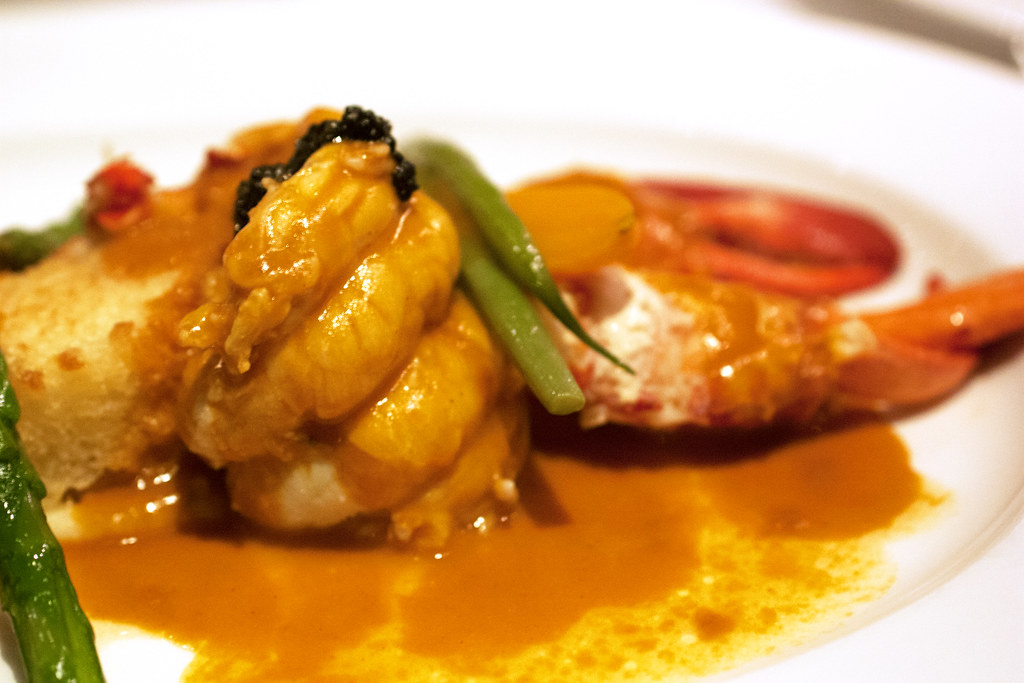
Image result for lobster newburg delmonico's
Lobster Newburg - I haven't had this in years!
Ingredients include cream, sherry, cognac, butter, and, of course, lobster.
Scrumptious!


Do you remember Lobster Newburg, Salisbury steak, Chicken a la King, and that all-time favorite Creamed Chipped Beef on Toast? This last one was also known to many of us as Sh..  …well, let’s just say that time marches on and, fortunately for us, so have the trends for what we eat.

We were accustomed to calorie-dense foods, foods that were relatively inexpensive but filled us and provided the calories for hard work and play. Noodles, pasta, potatoes, and bread played a big part in our diets. Unless it was spaghetti night, supper was meat, a starch, and a veg. Salads made very rare appearances on our plates. Farmers markets were few and far between, and unless your family maintained a vegetable garden, your veggies were days, even weeks old. The butcher, the baker, the green grocer, and the milk man, were the common independent purveyors who now find themselves under one roof in the supermarket.

Sundays were the days for a huge roast, perhaps leg of lamb or fresh ham, and all the accompaniments. Mom spent a lot of the morning preparing the roast, and the rest of the family spent the late afternoon working or snoozing off the effects of the meal. Today, such large roasts are served mostly on holidays. Many Baby Boomers don’t even remember a fresh ham, thinking it’s the non-canned variety of a smoked ham.

While weeknight desserts were things like jello, chocolate pudding, or tapioca, Sunday desserts were presentations: pound cakes, layer cakes, pineapple upside-down cakes, coconut cream pies, pies of every flavor, and, in season, things like buckles and cobblers. In summer there might have been a treat of home-made ice cream.

In the Fifties, while we on the western side of the Atlantic were eating these traditional foods, people like Julia Child were over in France learning new ways to cook. No longer was Chinese cooking just chop suey or chow mein. No longer was Asian cooking just Chinese. No longer were chop suey and chow mein or spaghetti and pizza the only international foods on our plates.
Television, advances in freezing foods, and widespread transportation meant that we were getting a larger variety of fresher foods and were learning new ways to prepare them. No longer did one cookbook cover everything we wanted to prepare. Fanny Farmer, Better Homes and Gardens, or the Settlement cookbook, have been joined on the packed shelves by hundreds of others. The vast variety of subjects to be covered in individual cookbooks meant that book stores moved the few cookbooks out of the Reference section, and began to devote whole sections of their shelves to them.

Today we aren’t as reliant on seasonal foods, although eating with the seasons, becoming a “locavore” and cooking with what is readily available from nearby sources, is the latest trend, especially for restaurants. Many restaurants don’t have freezers, preferring to use only the freshest ingredients for their menu. And that’s another difference in the way we eat today: more and more we choose to eat out. Rather than stock our kitchens with all the ingredients for international cuisines, we go to the local places that satisfy our tastes. Just in our area we can have Asian, Italian, Greek, Mexican, New York Deli, Southern, you name it, breakfast, lunch, or dinner, and it’s nearby. So much food, so little time!

Just wonderin’…   …Remember the party standby, deviled eggs? Just plain deviled eggs. Today, according to a recent issue of Saveur magazine, they marinate the whites in soy sauce and raspberry vinegar - just for fifteen minutes, mind you - and then fill them with the yolks that were combined with lump crab meat, avocado, and apple. Chefs are getting inventive. Food is getting fancy. It’s probably a good thing, but we have to wonder what “comfort food” will be to generations to come.


Saturday, December 31, 2016

MIRROR, MIRROR


I’ve got a file full of reflection jpgs. I love being able to flip the pix onto their sides and cropping them down to just the mirror image. I get some unusual pictures, but none as unusual as the first one I ever took. What better time to post this piece than the end of the year – we’re looking back and looking forward, these pictures look sideways too. Sorta…  

This might not look too interesting this way. It's just a picture I took from the
train going from Kristianand to Stavanger in Norway.
The year was 1981


When I was putting the photo in my scrapbook, I happened to flip it on its side
do you see what I see up there at the top?  Ugly fellow. 


So this picture put me on the lookout, all these years, for great reflection pictures.  I've seen several good ones, but none that I could save until these last years when I could keep them on my PC. Here are a few more: 

Another monster - this one from the camera of Jacqueline Donnelly.
She regularly posts wonderful pictures and stories
of her regular nature treks in her
blog Saratoga Woods and Waterways (SWW)


A Colorado specter from Jeff Howe -
it's fun when a reflection has 'eyes'


more...

interesting - another from SWW


and another from Jacqueline Donnelly, this of the Hudson River bank - 

Lots of things to think you see in this one


on and on...

Turn this sideways, and you'll realize that
this is Japan. Credit unknown.

and these two, just because I like them:

Rakotzbrucke Bridge, Kromlau, Germany
Picture from Designmilk, via Atlas Obscura


and this one I took in 1982 - I like it just because it was a wonderful place to be - at Peter Freebody's boatyard along the Thames in Maidenhead, England


Sunday, December 25, 2016

HAPPY HOLIDAYS...


...to everyone - Merry Christmas, Happy Hanukkah, and, to one special pal of mine who was born on this day many, many years ago and is still young at heart, I wish a very Happy Birthday.

Enjoy the day everyone. Here's a toast to a happy, healthy, busy year ahead, with not too much craziness on the political front.


Wednesday, December 21, 2016

CELEBRATIONS OF WINTER


The winter solstice, today, when the sun begins to shine for a longer time each day, was celebrated in almost all of the cultures of the northern hemisphere. Think of the many megalithic monuments that serve as calendars to insure the correct date of the solstice, and think of all the observation and study that went into the precise building of them. Inquiring minds wanted to know. Picture a tree growing from the base of the pagan celebrations of the winter solstice. The rites of the celebrations were many and varied and usually lasted for days. Today’s winter celebrations are branches of that same tree. They are all holidays - festivals or celebrations - rather than holy days or solemn commemorations.

It is generally agreed that Christ was born when the shepherds were abiding in the fields, watching their flocks at night, so it would have been almost any time of the year except winter.  Most likely it was the spring, but the proselytizers, the spin-doctors of the early Christian era, in an effort to attract pagans to their way of worship and thinking, cleverly placed the celebrations of their major and most attractive events to coincide with those of the solar calendar. The spring equinox became Easter, and the winter solstice Christmas.

The winter event was celebrated as Saturnalia in Rome, Yule by the Germanic people, as Lenaea, the Festival of Wild Women, in Greece, and under many other names by people such as the Druids, the Buddhists, and the natives of our own southwest. Until the more modern spin doctors of the eighteenth century elevated it again and made it more lucrative, Christmas was celebrated as a very minor holiday; Easter was the major holy day. In some places, such as Cromwell’s Puritan England of the 1700’s, the celebration of Christmas was banned. Many Christian sects still do not celebrate it.


There is more real history associated with Hanukkah, the Festival of Lights, than with Christmas. Starting on 25 Kislev, a date on the Hebrew calendar, Hanukkah, in its modern spelling, is an eight day festival commemorating an event in 165 BCE. On that day, the Maccabees drove the army of Antiochus IV, king of the Syrians, from the Temple in Jerusalem. In celebration, they rededicated the Temple and lit the eternal flame. They had only one day’s supply of consecrated oil, but it lasted for the eight days it took to prepare and consecrate a new supply. This miracle became a good reason for a winter celebration, and, minor though it was then, it was a good antidote to the Greek festival celebrating Zeus. Yes, it too was a minor holiday, but in the last century it came into prominence perhaps as another antidote - this time to all the Christmas hoopla.

Most winter symbols transcend religion. Greens, especially evergreens as boughs or wreaths in the north, were always a part of the solstice celebrations. Many rural homes shared their living space with the livestock.  In many homes the windows were for light, not air, so in northern climates the unglazed windows were covered over in winter. It was customary, probably downright necessary, to bring fresh-cut evergreens into the homes to freshen the air during the winter months. Candles too are part of the winter celebrations. Whether the eight on a menorah or the multitude on a Christmas tree, real candles or electric, they represent the light and joy of the season. 


However you celebrate the coming of Winter, I wish you and your family a meaningful and happy Christmas and Hanukkah – and in many of our homes it is both.


Saturday, December 17, 2016

WHAT THE DICKENS

Here we go again - I forgot to post this yesterday. This is another piece I wrote for our community magazine.  It was published this month, along with an article and pictures on a Dickens Village collector.

Not Dickens, but a dapper Washington Irving

Yes, what the Dickens.* Many believe Charles Dickens to be the first author to celebrate Christmas in literature. Not so. Dickens credited Washington Irving. Washington Irving, who, in turn, credited another source, was born in Manhattan in 1783, the same week the American Revolution ended. We know him best for his two most famous stories, The Legend of Sleepy Hollow and Rip Van Winkle. What is not well known about Irving is that one of his collections, The Sketchbook of Geoffrey Crayon, Gent., the collection written around 1820 that contained The Legend of Sleepy Hollow, also contained five Christmas stories. These stories, later published separately and called Old Christmas Sketches, were the later inspiration for the Christmas festivities portrayed by Dickens in his 1843 novel A Christmas Carol. Earlier, in 1812, when revising A History of New York, Irving inserted a tale about a dream he’d had about Saint Nicholas soaring over the treetops in a flying sled. Sound a bit familiar? The dream idea, it’s said, can be found in that of Ebenezer Scrooge, and the flying wagon in “a sleigh full of toys and St. Nicholas too.”

Irving had his own inspiration from the notes he made while traveling in England and Europe for two years in the very early 1800’s. During one holiday he stayed at Aston Hall in Birmingham, England. Surely it was then he came upon The Vindication of Christmas, written in 1652, telling of the festivities and customs of the era. Irving’s Old Christmas Sketches idealized the traditions and made them popular among the new Americans who then revived many of the customs that had been forgotten over the previous two centuries. Though now part of the holidays, and introduced from Germany to England by Prince Albert in 1841, the Christmas tree didn’t make an appearance in A Christmas Carol. That work though, published the same year as the first printed Christmas card in England, did revive many other lost customs there too.

Imagine having to have a place to store all this, and having to set it all up,
and then take it all down? It's a labor of love that I wouldn't love to do.

On both sides of the Atlantic, Dickens’ works were much more widespread and popular than Irving’s. Basically, this is the reason we talk today about a Dickensian Christmas, or collect “Dickens Village” figurines. In December, we wonder as we wander through many a city or town’s creation of a Dickens Village of shops, crafts, foods and beverages. Alas, none of them are named for the American, Washington Irving.


*From The Merry Wives of Windsor, Act III, Scene II,   by William Shakespeare 

Friday, December 9, 2016

ANONYMOUS GARBAGE


I'd never seen such a range or recycling bins.
I'm glad we aren't required to have all these in our homes. 


I had to laugh at my own thoughts this morning – I tossed a used paper towel into the trash and wondered what garbologists of the future will think of what else I’d thrown out.

I know they’ll know my name and where I lived because of the section I tore out of an unsolicited form I was sent to apply for life insurance, a credit card, cable service, or some other thing I didn’t want in the first place. I recycled the rest of the form. I’m a conscientious recycler, but every once in a while I’ll toss out something that really could have been recycled. I have a momentary pang of guilt, but just momentary. And sometimes I hear someone in the future going “tsk, tsk.” But then I tell myself that they’ll find just this one thing in there and will know from the absence of any other recyclables that I was basically a good person. Yeah, right? It beats me why I sometimes think of what the future will think of me – I’ll be dead, why do I care?! It's a waste of time and brain power.

Do any of you remember this picture?


I’ve had this picture in my head for years. I named it “Our Lady of the Toilet Seat.” Perhaps that really was her title. I vaguely remember the story, so I googled “woman with a toilet seat on her head,” and came up with the picture and an entry from Mentor’s Reader.  The Picture comes from David Macaulay’s Motel of the Mysteries. I remember reading the book, but not owning it. (We did own and have passed on down many of his wonderful books like The Way things Work, Cathedral, City, Castle, and our favorite, which we still have, Mill.*) I recall that the folks in the fictitious future didn’t know what to make of the toilet seat. I wonder what other things might pose a question for garbologists.

I say garbologists, but in fact, garbologists study today’s waste system, it’s the poor archaeologists of the future who will be dissecting and studying the trash we bury today. By then it will be routine, and I’m sure that today’s archaeologists are delighted that they don’t have to study modern garbage dumps. Modern middens usually don’t interest them. Give ‘em a random pot shard, a bronze artifact, even an old bottle, and they are content.


*As an aside, and just by coincidence, in double-checking the titles of the many Macaulay books we’ve owned, I discovered that in 2015 he published his work called Toilet: How it Works


Friday, December 2, 2016

GREETINGS...

                …and salutations!             


Here's one just out in our community magazine, held over from last year. I did use it in a blog last November, so I am cheating today. I must admit that I still like real cards - to receive and send. I make my own greeting cards, using photos like the one above that I've taken throughout the year. I enjoy planning and using just the right photo for each occasion.

Handwritten, hand-decorated greetings date back for ages. The ancient Chinese sent New Year’s greetings. Each year they had a different animal theme to work with. From medieval times on, handwritten cards like Valentines were sent in many European countries. By the Renaissance era, cards were available from the printing presses. During Victorian times the Christmas card became popular. The Victorians positively excelled at the greeting card, and inexpensive postage stamps help spread the holiday cheer. From the first British printed Christmas card in 1834 to the first electronic card in 1994, billions of printed cards wended their way around the neighborhood and around the world.

Gifts, a cake and candles aside, how do you like friends and family to help celebrate your birthday: a greeting card, a phone call, a surprise visit from a hired entertainer, or an e-mail or e-card? How do you like to send and receive December holiday greetings? Do you delight in amassing and displaying dozens of cards? Of course you delight in receiving some of the now-popular photo holiday cards, especially if they are of your grandchildren. Do you like to make and send your own creations, or send store-bought cards? Have you saved a tree and opted to email your greetings?

Even Hallmark - “When you care enough to send the very best” - has joined the ranks of Blue Mountain, American Greetings, Jacqui Lawson, and others in the field of e-cards. Yes, Hallmark. It was bound to happen. Most people, though they still prefer snail mail greetings, don’t mind e-greetings, knowing that the sender still cared enough to think of them. 
         
Some have opted out of the holiday mailings, but if you haven’t, whichever you choose to send, hand-made or boxed cards or annual letter, you can make life easier for yourself by tackling the job early. Right after the holidays, update your card list (be ruthless!), then save money by buying your cards at the January sales. If you make your own cards, the summer months spent indoors in air conditioning are the ideal time to begin creating. Begin working on your holiday letter as the newsworthy events occur. Start addressing the cards and finish the holiday letter just after Thanksgiving. Sounds easy and, when you start early and stick to it, it is.


Friday, November 25, 2016

FRUITCAKE - THE GIFT YOU LOVE TO HATE


We never eat fruitcake because it has rum
And one little bit turns a man to a bum
Can you imagine a sorrier sight
Than a man eating fruitcake until he gets tight?

                                                                       The Chad Mitchell Trio’s version of The Song of the Temperance Union


Ah, fruitcake! The stuff of legends. Derided in song, derided in the media, it seems to be the ubiquitous non-comestible. To tell the truth, there are some very awful versions of it foisted on the public each year. These are the overly sweet, grossly dense, preserved-fruit-laden hockey-pucks-on-steroids available in every supermarket in America. Glacéd, crystalized or candied, whatever you choose to call them, the fruits and citron can overwhelm the taste buds. It is really a mystery why thinking people would purchase these cakes as gifts. It becomes a tradition to laugh over or to moan over. Just think of the waste when the rejected cakes get tossed into the trash. What will future garbologists think of us?

There are many, many verses to The Song of the Temperance Union. They suggest that there is little to be eaten or done, including drinking water and jumping rope, that can’t turn a man into a beast. The fruitcake lyrics might have been apt many years ago, but today, though they can be found, it is rare to find a good spirit-lace fruitcake for sale.

Oh, but you can certainly make a soused version in your own kitchen. Work with whatever fruit or nuts type cake or bread recipe you have. The key to a good soused version, be it done with rum, bourbon, or whatever tipple you prefer, is to have a good cake-to-fruit ratio: smaller pieces of fruit and nuts, easy on the citron, as with a good Italian Panettone cake, and with more cake to absorb the liquor.


The secret to the sousing is to start early. Plan on baking the weekend after Thanksgiving - I'll start mine tomorrow. Fill a spray bottle with your beverage of choice. Once your cakes are out of the oven and cooled, begin the process of spraying them thoroughly on all sides. Store them in air-tight containers or bags. Get them out once a week for four weeks, and spray them thoroughly again. By the holidays you will have a scrumptious fruitcake to give or keep - and keep it will. Some soused fruitcakes, properly kept in the bottom of the refrigerator, have been known to last, slice by slice, remembered now and then for a special treat, for well over a year.


Friday, November 18, 2016

A HOMEGROWN THANKSGIVING


This is a huge tom. I do miss seeing these big birds wander through
the back yard, year round, of our previous home in upstate New York.
This picture could have been one of mine.
And did you know they could fly? Yep! As we were driving down our dirt road,
we'd come upon a flock of them and watch them scatter
and fly up to the overhanging trees. Lots of noise and fluttering,
and a strange sight to see.

The menu varies from time to time, and from place to place, but the basic Thanksgiving meal that comes to mind traditionally consists of turkey, stuffing, sweet potatoes, mashed potatoes, green beans, corn, cranberry sauce, rolls, and apple pie. Purists say that the only things on that Thanksgiving plate native to this country, meaning the lower forty-eight, are the turkey, wild as it was, and the cranberry. If we consider just that lower forty-eight, yes, that’s correct, and only because those two were here before humans came across the land bridge from the other side of the world. Most of the rest of the meal made its way from Central and South America with population movements throughout the hemisphere.

We can assume that those original travelers brought food stuffs with them, but they would have found plenty to eat here. There were wild rice, which isn’t a rice but a grass, and nuts: walnuts and pecans, to name two. That’s a fair meal if that’s all you have, but they could forage and include wild grapes, black cherries and other berries, and greens like amaranth, wild asparagus, and others. You have to know what you can and can’t eat, and you have to know how to cook them. Trial and error. Of course, there were always fish and game, and honey and fruit for sweets.

If we consider all of the Americas and what was here before the Pilgrims celebrated that first Thanksgiving, if we really want an American meal, then we have to leave out what the Europeans brought to these shores: anything made of wheat, which originated in the Near East, and apples, which come from Central Asia. There go the rolls, the stuffing, and the apple pie. Corn bread anyone?

Cranberries before the deluge. Many people thing they grow under water.
Check out the Ocean Spray website and learn more.

People around the world have always celebrated and given thanks for a bountiful harvest. We Americans have raised the tradition onto a pedestal. And yes, especially as far as our feast menu is concerned, we do have a lot to be thankful for - for the turkey and the cranberries, and for the corn, the potatoes and sweet potatoes, the beans, the tomatoes, the peppers, the wild onions, the pumpkins and other squashes, and the bouquet of sunflowers for the table.
The Europeans brought the wheat and the apples - all the rest were here, waiting to be enjoyed and spread to the rest of the world.


Friday, November 11, 2016

FROM BROOKLYN TO A MOUNTAIN IN KOREA

In honor of my husband on this Veterans Day, I am posting this article I wrote for this month's community magazine. Frank is a font of stories about his time in the army during the Korean War - some are funny, some upsetting, some would just curl your toes and make you want to run for cover.

Frank at Ft. Chaffee, Arkansas, 1952

One day in 1952, Frank Johnston, a young man from the Bay Ridge section of Brooklyn, arrived in Korea. He arrived there via Fort Chaffee, Arkansas, where he’d gone through basic training, had turned down the dubious honor of being Soldier of the Month, and had filled out a questionnaire about what he’d done in civilian life. Among other thing, he’d been a mechanic and he knew a thing or two about engines and motors. That knowledge got him into what was then called the 556th Signal Radio Relay Company, and to the top of a mountain in Korea.

He vividly remembers the voyage across the not-too-Pacific Ocean. Fortunately, or unfortunately, as the case might have been, he had good sea legs. He’d spent a lot of his preschool years on the tugboat of his dad who was the harbormaster of New York City’s Erie Basin, so seasickness wasn’t a problem. His older brother had advised him to be sure to take a top bunk near a ventilator opening, and to take his shoes up with him into bed at night.  Good advice, as it turned out. It was a very rough crossing and guards made sure no soldier went out on deck. The vast majority of the guys on the transport go very, very sick. Trashcans were soon brimful of the results. The regular hands on the ship noticed that Frank was among the healthy, and so he was dragooned into dragging trashcans full of “upchuck” up on deck to empty them overboard in high seas. They tossed a few trashcans, contents and all overboard before the crew realized what was happening and made them tie the cans to the railing. The healthy guys were on trashcan duty and KP, but they got to eat whatever they wanted, including steak.

The northern and eastern parts of Korea are fairly mountainous, much like our Appalachians, and they posed problems for effective communications – thus the Radio Relay teams. Up on the mountain, Frank was part of a team of nine who, assisted by men of the Republic of Korea Army, known as the ROKs, maintained the generators and equipment needed to transmit information between corps headquarters and the front lines. There was no road up the mountain. Everything, including the generators, cans of fuel, food, and other supplies came up on the backs of the ROKs. At one time they even carried Frank up the mountain after he’d had a dose of a potent pain killer for dental surgery at base camp.

The winters on the mountain were brutal. Everything froze. Surrounding it with the fuel and food to be kept at a useable temperature, they had a stove glowing red hot in the main tent. Sitting around that stove, they roasted their chests and froze their backs. It was always cold up on the mountain. When headquarters called for the return of winter clothing and bedding in the spring, the savvy guys failed to comply.

The mountain wasn’t an easy posting. Among other “interesting” incidents, there was the time when rats became a problem at the base of the mountain, so the whole base was fired to kill the rats. It only succeeded in driving the rats up to the top of the mountain, providing excellent target practice for the overrun relay team.

Frank got to travel a bit around the country. There was the time he went to visit a buddy he’d met in basic. The guy was a forward observer, and Frank got pinned down with him under enemy fire for several days. Occasionally, he’d travel to the coast and bring back fresh seafood, especially octopus, for the ROKs. They declared Frank to be “Number Huckin’ One!”

On a recent trip to Washington, D.C., Frank got to visit the Korean War Veterans Memorial. It happened to be raining that day. Frank said that the men in the squad were carrying all the different arms and equipment appropriate to the time, and were dressed for the rain and gloom of “The “Forgotten War.”

On a rainy morning at the Veterans Memorial in Washington, DC.
Frank recognized the guys and their gear.


Friday, November 4, 2016

NOVEMBER - I WILL MAKE YOU BROOCHES


I’ve read many of Stevenson’s novels - Treasure Island, Kidnapped, and others – and I grew up with A Child’s Garden of Verses. I’d never read any of Stevenson’s other poetry, that I remember, until I came upon this one at The Writer’s Almanac this past April. I’ve saved it until November, Stevenson birth month.


I Will Make You Brooches

I will make you brooches and toys for your delight
Of bird-song at morning and star-shine at night.
I will make a palace fit for you and me
Of green days in forests and blue days at sea.
I will make my kitchen, and you shall keep your room,
Where white flows the river and bright blows the broom,
And you shall wash your linen and keep your body white
In rainfall at morning and dewfall at night.
And this shall be for music when no one else is near,
The fine song for singing, the rare song to hear!
That only I remember, that only you admire,
Of the broad road that stretches and the roadside fire.


In searching Google Images for an illustration for this poem, I came upon the lovely calligraphy above by Susan McGill, and also the fact that the poem had also been put to music. I didn't know that. Learn something new every day.